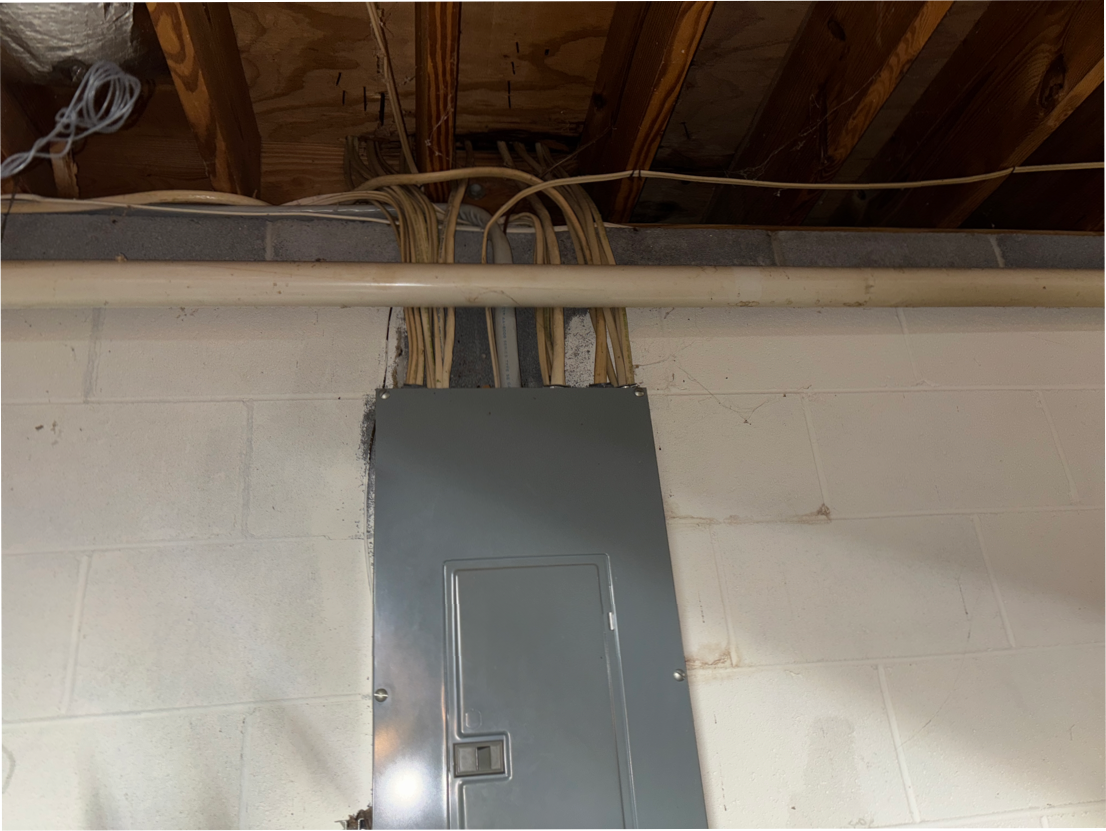
Bet you can’t guess what’s going on here. Clue, water dripping from the main panel.

1 Like
Nope, it’s not the waste pipe above the panel, it’s actually the water leaking down the wiring coming from the chimney chase area above. Do to the internal drip loops inside the main panel, none of the internal components were affected. Who says it doesn’t pay to inspect when it’s raining.


6 Likes
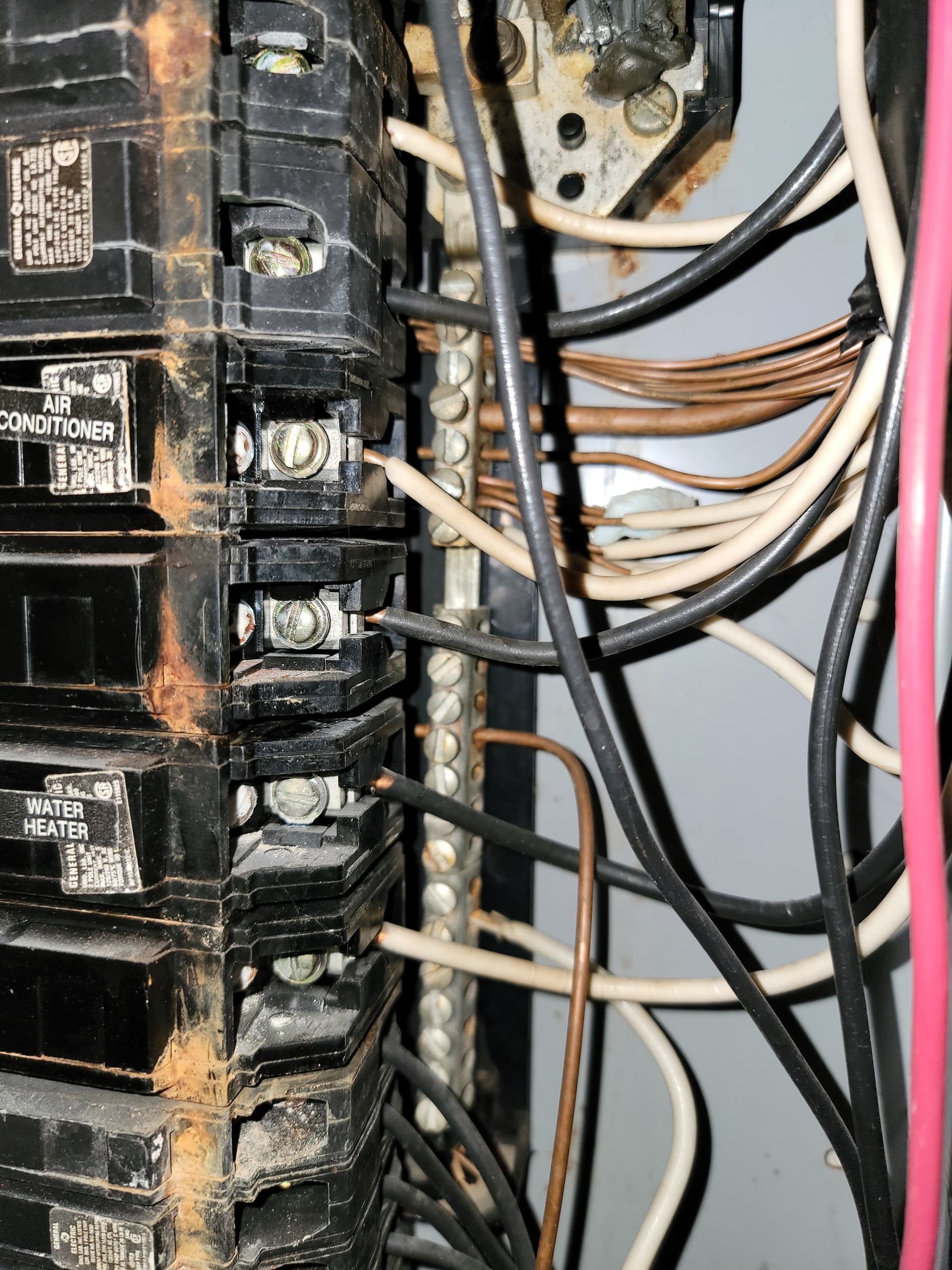
Usually it’s from an inadequate seal on top of the meter socket. Water will find it’s way inside the SEC insulation and then drip into the panel. I found this one yesterday.


7 Likes
That goes in the plumbing section. It’s got a leak!
8 Likes
I have to disagree with its a plumbing issue. You would observe this problem when you inspect the exterior and service coming into the bldg. I know if I called my plumbers to check this out, they would show up charge me a service fee and leave. This is an electrical problem from not sealing the service panel adequately with rubber seals, or bushings. This is a very unsafe situation. Just giving my opinion as I see it.
1 Like
I’m surprised. Bob is usually right on with his electrical knowledge. lol

But, are you sure it was well water?
1 Like
This house had an underground service lateral. Thermal imaging also revealed a leak in the room above the main panel. The leak was to the left of the fireplace at the edge of the chimney chase. I’m going back today to inspect the roof with the drone.
1 Like
So this is not even an electrical issue. At least the panel or its components weren’t damaged.
1 Like
Hey Robert, I suppose I should have entered this under Structure, perhaps. With the amount of water dripping through the panel I was surprised the internal components were ok.
1 Like
It’s good in the electrical forum too because as you’ve mentioned this is something to look for when inspecting a panel. Looks like the water only dripped off of the conductors and never made it to the breakers or the bus bars.
It is a hybrid. The problem was discovered during the electrical inspection. What causes moisture issues inside a panel can vary.
I agree; we hate inspecting in the rain, but in reality, we should lean into it.
2 Likes
Afternoon, Antony.
Hope to find you well.
Sorry for the long winded story. It reminded me of a client I had running my construction company.
I remember while running my exterior masonry and concrete restoration company, I received a call from a distraught client about water infiltration into a fire box insert installed on the first floor fireplace. New home owner. First home. Very cheep individuals.
I was referred by the local new paper editor. I helped a lot of their friends.
Having taken the InterNACHI moisture intrusion course I booked an appointment. Their neighbor, an unregistered contractor, could not find any issues. Rooting around the home I found water was also entering, infiltrating the main panel similar to your image running down circuit cables.
The crown was one issue, and the roof wall flashing the other issue. The siding was shot! Open locks and nailed.
Half way through the job I knew I was not getting paid. The chase and exterior envelope had varying concerns. I stopped the intrusion but was not paid in fill.
Not because they did not like my work but because they felt the repairs would not last. The neighbors unqualified opinions.
PS: I left them a reminder to pay their bills:-) Trust me.
Low and behold I got to inspect the home when they put it up for sail some 7 years later. Lol!!! Needless to say, I wrote up every bloody defect and deficiency I could find. I did my best in 4.5 hours to insure they remember me professionally! I heard Roy Cooke Senior in my head inspecting and writing the report…Talk soft…Write Hard over and over again.
To make a long story short, my clients refused the purchase, along with others.
They threatened litigation. I laughed, said next time pay your bills, and wished them luck.
Thanks for your patients, Antony. Been some time sense I though of those clients and how I had the last laugh.
Read my above post. True story.
Chases are notorious for water infiltration.
1: Crown. Insure the Crown is properly sloped, no exposed sheet metal seams, and the Crown extends past the chimney chase body by ><4".
2: Roof Flashing! Look for, Apron, Step, Counter & Headwall flashing, all properly secured for expansive/contractive movement.
3: Sidewall Flashing. Flashing & Sealing at mixed material intersections.
Provide images if you can.
2 Likes