Hey All! I am a recently designated CPI with 0 paid inspections on my resume. I’m working on some CE and I’m curious about a part within the electrical inspections, specifically GFCI’s. I was under the impression that anything on the load side of a GFCI receptacle device is also protected. Please correct me if I’m wrong! Thanks 
It should be!
3 Likes
Yes the load side of a GFCI device provides protection for everything downstream that is connected to it. As Dave said it would have to be wired that way.
3 Likes
Consider a bathroom with a single GFCI. I have seen many that have the lighting wired to the load side of the GFCI. Code does not prohibit this but a sudden change in lighting (when the GFCI trips) creates a hazard in my book and I write this up. It is a simple matter to wire the outlet (GFCI) independent of the lighting yet keep both on the single 20 amp circuit required for bathrooms.
1 Like
As others have already stated, you’re correct.
Here’s a diagram that might help understand load vs line.

2 Likes
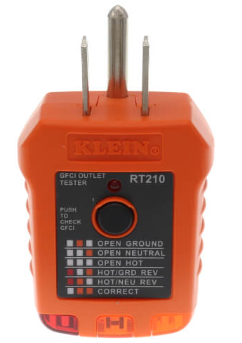
That is the clear advantage of using the test button on your standard GFCI circuit tester. Actually test that the load side receptacles are indeed protected.
1 Like
Thank you all! I was asking specifically because I was watching the video “Electrical Inspection with Ray”, and he spent a notable amount of time citing the code for the date in which the home was built after he noted that there was a standard duplex receptacle within 36” of the kitchen sink, and not a GFCI. But the GFCI was located on an adjacent wall, and was in fact tied to that branch…they just never made solid mention on the acceptability of that.
The code requirement is for that receptacle to have GFCI protection. As long as the duplex is GFCI protected by an upstream device it’s code compliant.
There’s a second set of terminals on a GFCI receptacle outlet that feeds and protects everything downstream. There’s a piece of tape that covers the terminals to clearly identify their purpose.
1 Like
@aernst2 As you work through getting comfortable with things, you may find that the circuit is protected by a receptacle in the kitchen, or a breaker in the sub or main panel. And some older homes may have one solo gfci receptacle in a bath or garage that may only protect a receptacle near the kithen sink….It can keep you on your toes, but do your best to make sure all is reset when done. You do not want to be repsonsible for any spoiled food if they happen to have the refrigerator in the kitchen or garage that does not get reset!
3 Likes