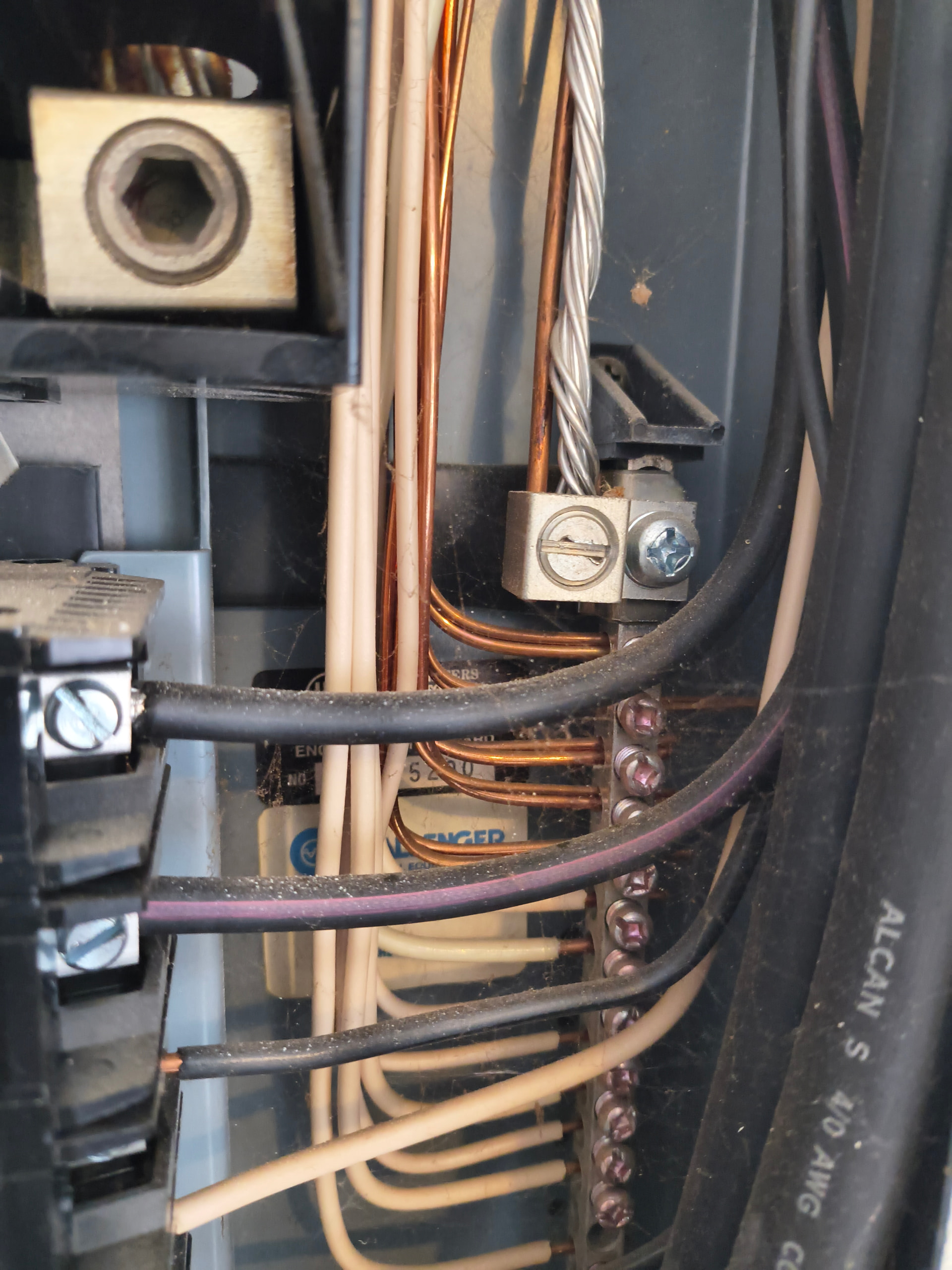
Do you see any problems in your picture? Are you saying everything is OK? If so, look again. Let us know if you find any issues in need of correction.
Edit: I assume you are a student asking for help finding the multiple issues in this picture. Do you have a larger picture showing the whole panel. there may be more issues that are not visible here.
Yes I am new and I know there’s double tapping and electric box is a Challenger
Good. Anything else jump out at the bottom left of the photo?
Wait, do you think the challenger brand is in itself an issue? Or do you simply inform your client about this as an FYI?

That’s a good picture, Jesus. And this a good exercise for everyone. There is more to comment on… What do you see?

Here are a few areas of concern with pretty simple solutions. There may be more areas that other members may find also. We have some really great Electrical inspectors that look at these questions.

Research of your panel information needed…
Note: Begin with the Panel Label that SHOULD be affixed to the inside of the panel.
(Yes, there are always exceptions as to where it is located. Older panels tend to be in the box, newer tend to be on the interior cover, some on the exterior).

When did they start writing laws to make electrical equipment “illegal” or “legal”?
I’m waiting to find out if the Title is “Telling Us, or Asking Us”??
Several insurance companies in Florida require replacement of the Challenger panels. If it is for a 4-point inspection and the panel does not have any issues, I will usually mark it satisfactory and let the homeowner know that it may be rejected by their insurance company. If it is for a home inspection, I have a narrative that I attach for all panels over 30 years, regardless of the manufacturer.
Insurance companies may require the replacement of electrical panels over 30 years old. Zinsco, Federal Pacific Stab-Lok, and Challenger electrical panels are often rejected by insurance carriers. This inspection does not guarantee the insurability of the home or its components.
Morning, Jesus. Pleasure to meet you.
Just because it energises an enclosure it is compliant?
Circuit Cable Terminations have rules wherever they land.
AI: Circuit cable termination requires ensuring electrical continuity, mechanical strength, and proper insulation to prevent overheating and failure. Key rules include using only one conductor per terminal unless rated for dual, proper wire stripping and torque, securing strain relief, and adhering to temperature ratings (often 60°C or 75°C)
Circuits cables have rules.
AI: Circuit cable rules that require strict adherence to safety standards, including proper wire color-coding (black/red/blue for hot, white for neutral, green/bare for ground), specific gauge sizes (minimum #14 AWG copper for branch circuits), and secure installation in approved boxes. Cables must be protected from mechanical damage and correctly identified
The doubled grounding conductors are not an issue. The issue is the panel not meeting the workspace requirements. Is this in a closet?
The white in the breaker probably pre-dates the requirement to be marked as a hot conductor.
The multiple cables not secured to the panel by entering the large knockout do not meet the code requirements also.

The double-tapping should not have occurred, as there are additional slots available for more breakers. The installation of this device was performed by a licensed electrical contractor or subcontractor, ensuring that it meets safety standards and operational efficiency. In exchange for your cooperation in allowing this energy management strategy, Sumpter Electric Co-op offers consumers a seasonal discount on their power bill, which commonly ranges from $6 to $40.
To facilitate this process, the system transmits signals through the power line to the electrical box that controls the designated equipment, prompting it to turn off temporarily during periods of unusually high-power consumption. This not only helps in stabilizing the electrical grid but also contributes to cost savings for consumers while promoting responsible energy usage.
SECO has abandoned these devices, but I still see them installed here and there. They aren’t actively doing anything. This is not to say there isn’t one somewhere still working at load balancing but as far I am aware, SECO moved to just giving people credits for installing energy efficient equipment. Power still runs through them, but it’s not doing any load balancing.