Can a furnace exhaust downward like this? It does have a draft inducer I’ve just never it like this

Good morning Chris. It certainly looks odd  You have a model number for that Trane?

Don’t see anything in the instructions that says it cannot be vented that way. It does say the 2-3 inch reduction coupler is not needed for an upflow installation (only for horizontal installation). Is the condensate handled properly?
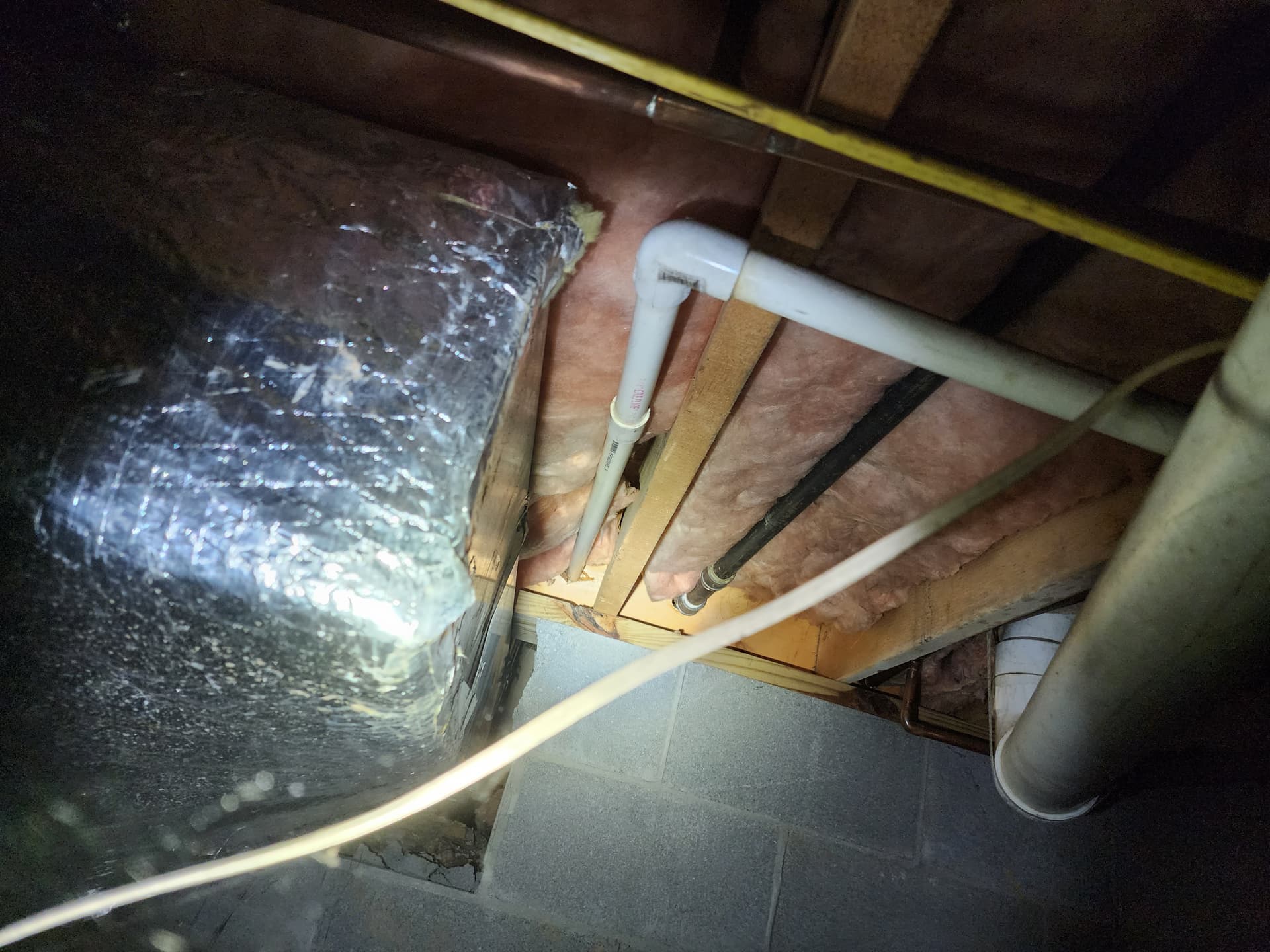
It goes outside and is buried in the dirt. I dug down some but I suspect it’s going to sewer. Didn’t see any issues in the compartment.
There was rust that could indicate a previous condensate leak but all dry today. Also there was some crust around gas vent joints if that may mean a previous leak?
That rust though is from the AC coil though so without running it can’t know whether active it’s too cold
Uploading: 20230322_104414.jpg…
Uploading: 20230322_103857.jpg…
Uploading: 20230322_103848.jpg…
Uploading: 20230322_104006.jpg…
That is a first for me!
2 Likes
On a side note there is a tankless water heater for this home. When running the master bathtub and dishwasher together there was no water at the seperate shower and kitchen sink. Not just hot the cold didn’t work at shower either and was very low flow at kitchen sink. I don’t see many of these but I thought only the hot should shut off if can’t keep up? Am I right on that?


A couple of things. Your photo’s did not load a few posts up. You need to wait longer for them to download. And did the home have an irrigation system?
There is a lot going on here. One thing at a time.

Not the same pipe if that is what you are thinking.


The above looks like it’s part of an irrigation system.
You do not need to know if it is active because condensate outside the condensate system may only happen under certain conditions. You should call it out as past or recent condensation which may only present itself under certain seasonal conditions. I write this up every time for evaluation. Condensate should be controlled.
Finally, you should always locate where every exhaust system discharges.
3 Likes
I haven’t been in the crawlspace yet I’ll try and verify where the condensate goes when I do
How about the roof? I would double check for the furnace exhaust at the roof and sidewalls. You have not found it yet in my opinion. Chase it all down! You need to find and understand how these systems get their combustion air, where they exhaust and how the condensate is handled.
Need to reload… either pics are too large, or you were too fast and impatient for them to load properly.
1 Like


Read the installation manual again, or for the first time. High efficient units create condensation in the pipe. It is required to slope the pipe back to the unit, where it drains out as condensate. There is nothing I can see that will drain this condensate at the bottom of the flue pipe. Is there a "T"connection behind the refrigeration line set?

2 Likes
Chris, do you have a photo like this? I suspect the inside is in similar condition. And you could map the condensate like David did.

1 Like
I knew where it went as soon as I saw it. At the exterior 10-15 feet away by the AC. Now confirmed 4 hours later.


No irrigation system at home. Only 2 plumbing vents penetrate roof opposite side of home. No tee downstream of PVC exhaust. Supply is taken from garage.

1 Like
Top is the concentric vent for the water heater. Bottom appears to be the furnace. Looks like a lot of condensate on the ground.
@dandersen can it slope away from the unit and drain to exterior? Seems this would promote freezing and other issues. The manual is moot on the subject. The manual does say the pipe should be insulated if it travels thru an unconditioned space. I’ve never seen that done.

1 Like