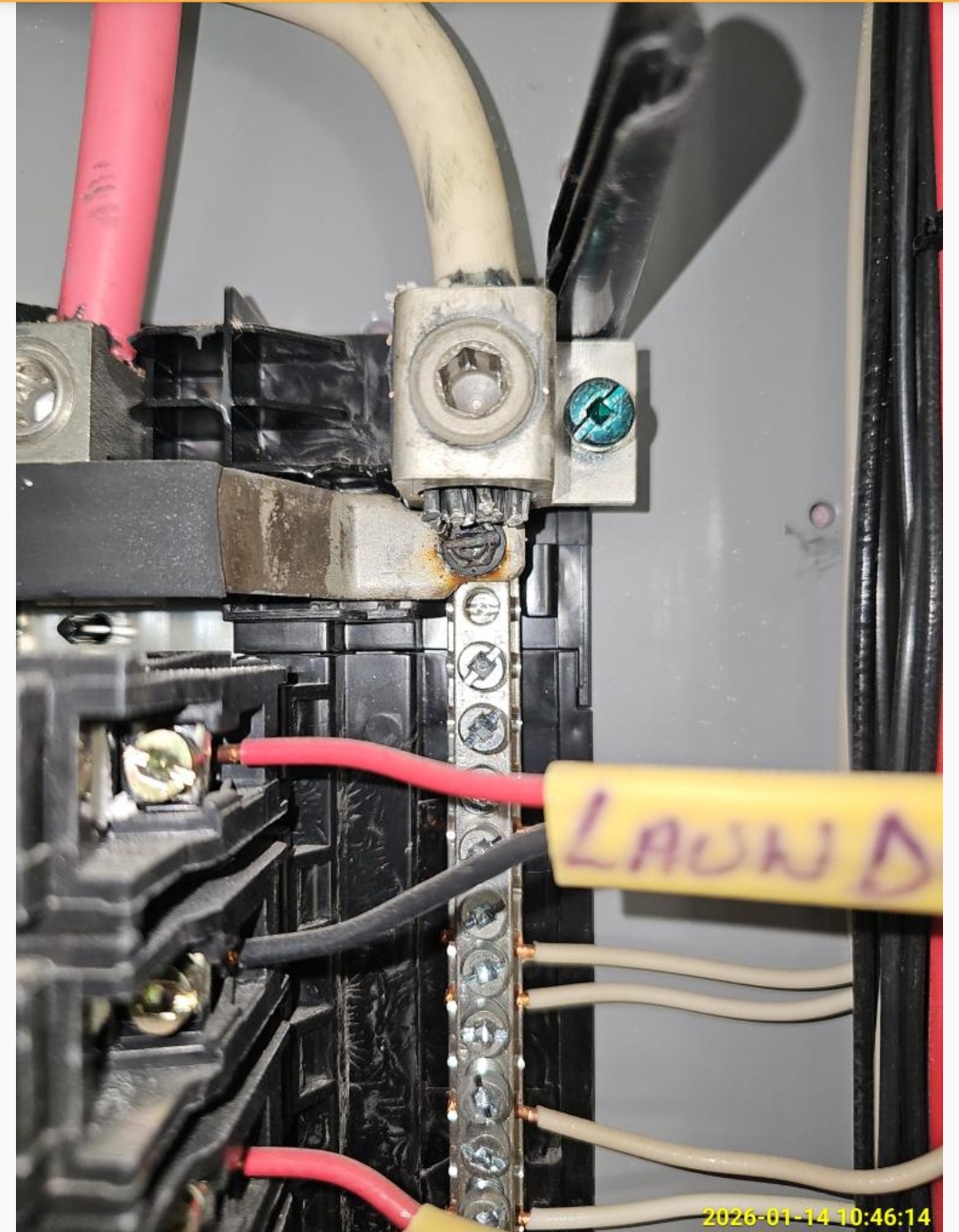
Good Day, had a recent inspection on a townhouse and every receptacle in the bedrooms, hallways, living room and master bath were indicating HOT/GROUND REVERSE on my receptacle tester. Everything else in the townhouse came up showing as correct.
In the sub panel, I ran the manufacturer test for the AFCI breakers and all but one AFCI tripped and reset properly and that was the master bath. So when I tested the master bathroom the receptacle were out.
This is newer construction 2017 and I have never had this circumstance show up in an inspection. My question is, are all those circuits showing HOT/GROUND REVERSED typically because of the AFCI Breakers themselves, or was it because they did not wire it correctly at the breakers themselves, or could it possibly be that the lead receptacle was not wired correctly and that is why everything showed incorrect? Looking for a little more insight. Are there faulty AFCI Breakers that I have not heard of? Etc.
Nonetheless, I recommended the Client have the panel evaluated by a licensed electrician.
Did you check with a different receptacle tester or any other devices? First thing is just to rule out that it’s not your tester that’s operating abnormally. Our fault breakers and none of themselves shouldn’t show reverse polarity. A pattern where everything is wrong in the same way pretty frequently indicates an installation goof.
Huh? So it didn’t trip or it did trip? Is this an Eaton panel?
Regardless, it sounds like it’s a hot mess. I can’t think of any way to have the neutral and ground reversed inside the breaker.
Inside the panel did those circuits look wired properly? Like the below image? Sorry, this one is PON. a 2017, probably isn’t PON. It was the first one I found.
No and you did the correct thing by recommending evaluation by an electrician. I recommend either trying to meet the electrician or giving the electrician a call after he/she has fixed that to get the “rest of the story.”
An open neutral causes the plug in tester to show hot ground reverse when there is a load on the circuit. Looks like that factory screw at the cross bar is loose and over heating.
The EGC’s and neutrals are on a separate buses (as they should be) and the green screw does not appear to be engaged with the metal panel enclosure. Some manufacturer’s ship the green screw as shown in the photo and it’s up to the installer to tighten it and engage it with the metal panel enclosure when applicable.
If the neutral connection to the tie bar is compromised as Yu suggested then the issue of the open neutral would effect the circuits on the left side of the panel.
116° is not really hot unless it’s 116°C. However, it is warm enough to suggest that there are one or more loose terminations, or the load on the panel is seriously imbalanced.
The reason I ask is because I came across a similar issue once in my own house in a basement bedroom that the previous owner had finished. I had an electrician friend help me investigate and discovered a back stabbed neutral in an upstream receptacle had a bad connection. He said it’s a common “false reading” with many receptacle testers, even though there’s really an issue albeit a different one.