hello i am studding for the license exam and came to a question about a tank located in the attic. the answer is that this is an open system. is that correct? i always thought that the system that has the tank was a system that was closed as a result of having a check valve entering the house which would make it a closed system. I also thought that the system would need a tank because the water did not have anywhere to go when it gets hot like in a closed system.
What do you mean by “tank”; do you mean a pressure expansion tank? It being located in the attic is not useful, except that you must be somewhere warm.
Are you talking about ‘Water Heaters’ or ‘Boiler Heating Systems’ or ‘Other’?
The check valve or back-flow prevention device closes the system. Sometimes this is not verifiable.
1 Like
I must be missing something. Between “Hot Water System” and “Back Flow Preventer” I’m not sure what we are talking about. Generally, I think of a closed system as being one with a Pressure Reducer Valve (PRV) which prevents expansion back towards the water main source.
Not all PRVs have built in check valves. Neither do all water meters or municipal connections. And what if on a private system?
1 Like
Interesting that you would have a PRV on water; do they push the municipal water at higher pressure than household ideal? In my area I only see PRV’s on gas lines. Asking because it’s always nice to learn something new.
Yes but does the PRV have an integral bypass valve used to allow backflow of water into the public water system when the downstream side pressure is excessive but higher that the upstream side (city supply)?
1 Like
Here in many municipalities of Texas they require PRV’s due to the uncontrollable City main/supply pressures. On brand new construction without PRV’s I’ve read pressures as high as 160 PSI with an uncalibrated but not defective gauge.
Just as an FYI with the high pressures I just mentioned a PRV with integral bypass valve will be useless if the water heater TPRV trips at 150 PSI. How much damage has already happened in the remainder of the plumbing system?
1 Like
A tank in the attic is an interesting question. Sounds like it is for an old style hydronic system and that would be an open system, but frankly insufficient information to answer that. BTW, I’ve never seen the expansion tank for any hydronic system in the attic, but they do put them as high in the room as they can.
3 Likes
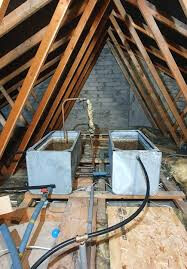
I was looking for the lights- but you did say hydronic, not hydroponic…LOL That’s something I have definitely never seen!
It appears that everyone is still here except the OP…
I only see PRVs on public water systems. My understanding (an it may not be correct) is that public water is supposed to be supplied at 150 psi (it really never is supplied at this pressure) for Firefighters, and should be reduced to 60-80 psi for residential use. I’m unfamiliar with PRV that allow backflow to the water main, which is why systems with PRVs require expansion tanks. I’m guessing that I’m wrong on some of my understandings and assumptions and would welcome additional infomation that I’m not familiar with. Thanks to All.
1 Like
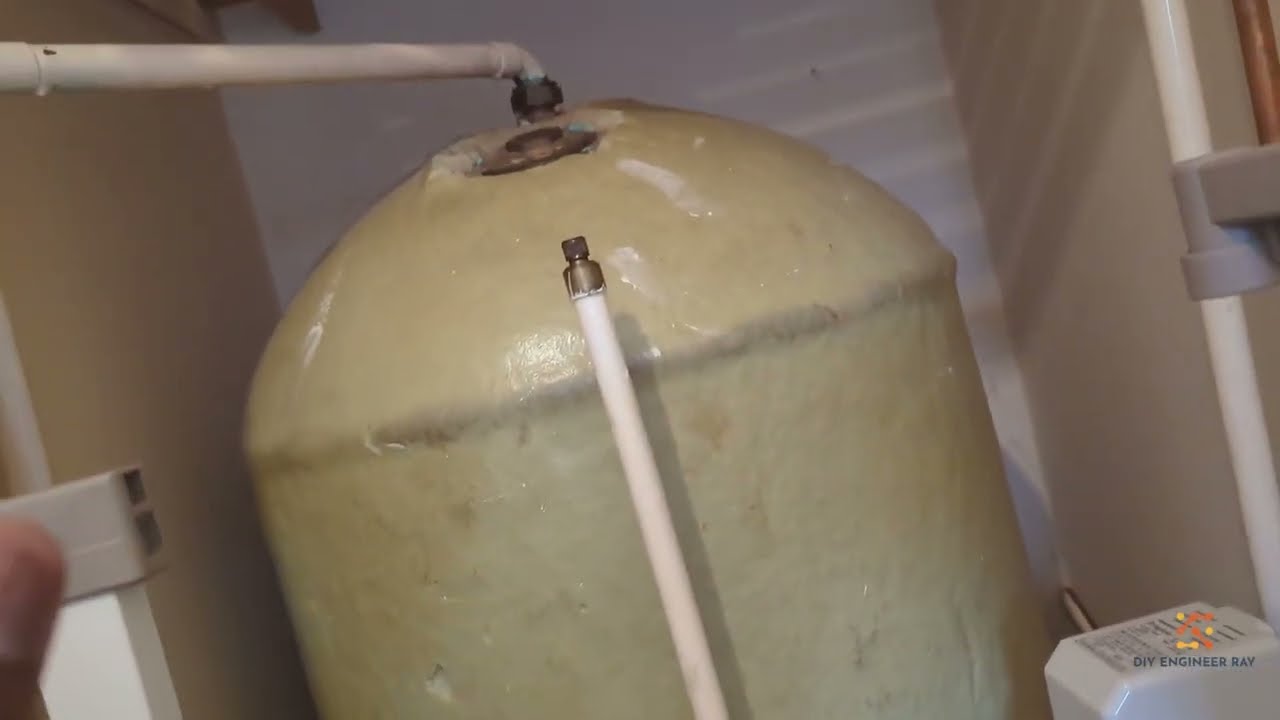
Here in GA, we have water heater tanks in the attic, though it is relatively rare.
“Closed” is probably not the best way to describe that.
A closed hydronic or solar system recirculates the same fluid – usually a chemically altered water – over and over again. It never interacts with any other system.
A check valve does not close a water heating system in that sense – new water flows through. A check valve or “backflow prevention device” solves one potential problem with public water distributions systems, but introduces several others including creating an area where backpressure can develop due to thermal expansion.
A PRV or pressure reducing valve does not inherently “close” a water heating system in either of the two senses above. These are common on residential in areas with high or variable water pressure. A PRV may or may not incorporate a check valve feature.
yes, that is what the question seem to be asking about. A tank in the attic if it is in the attic above the water heater that must be an expansion tank. All the videos I looked at show that that sort of tank is normally installed in a closed system which make since to me.
that is what I am trying to figure out.
The question is: A tank located in the attic is likely a(an)
the correct answer is: Open system expansion tank.
I saw the video and it was helpful to get me to know how those hot water systems work thanks Jeff. What is the likely hood that i will run into those units if I am doing residential inspections when I start?