I found corrosion on the service conductor but no signs of moisture or no signs of overheating at time of practice inspection. Sure looks to me by the debris dust laying under the lug it has been doing this for a while. Any ideas why? The red sheathed cable looked good. I sent extra pictures to show the left side is not loaded any more then the red cable side


Where does the other end of that cable originate, and do you have any photo’s of that origination point? If not, describe what you know or see in that specific area about the connection point and location.
1 Like
Thanks for asking that question, it practically told me I need to better or add to my photo takings. It drops in straight from the meter and conduits seemed ok, but I do not have a good picture as it enters the house (lesson learned). Then my stand back picture of the panel shows me it shoots straight up a maybe 16” and then swoops out. The infrared shot was the AC breaker. The house is vacant with AC running non stop, that thing never shut off, poor insulation in Attic.


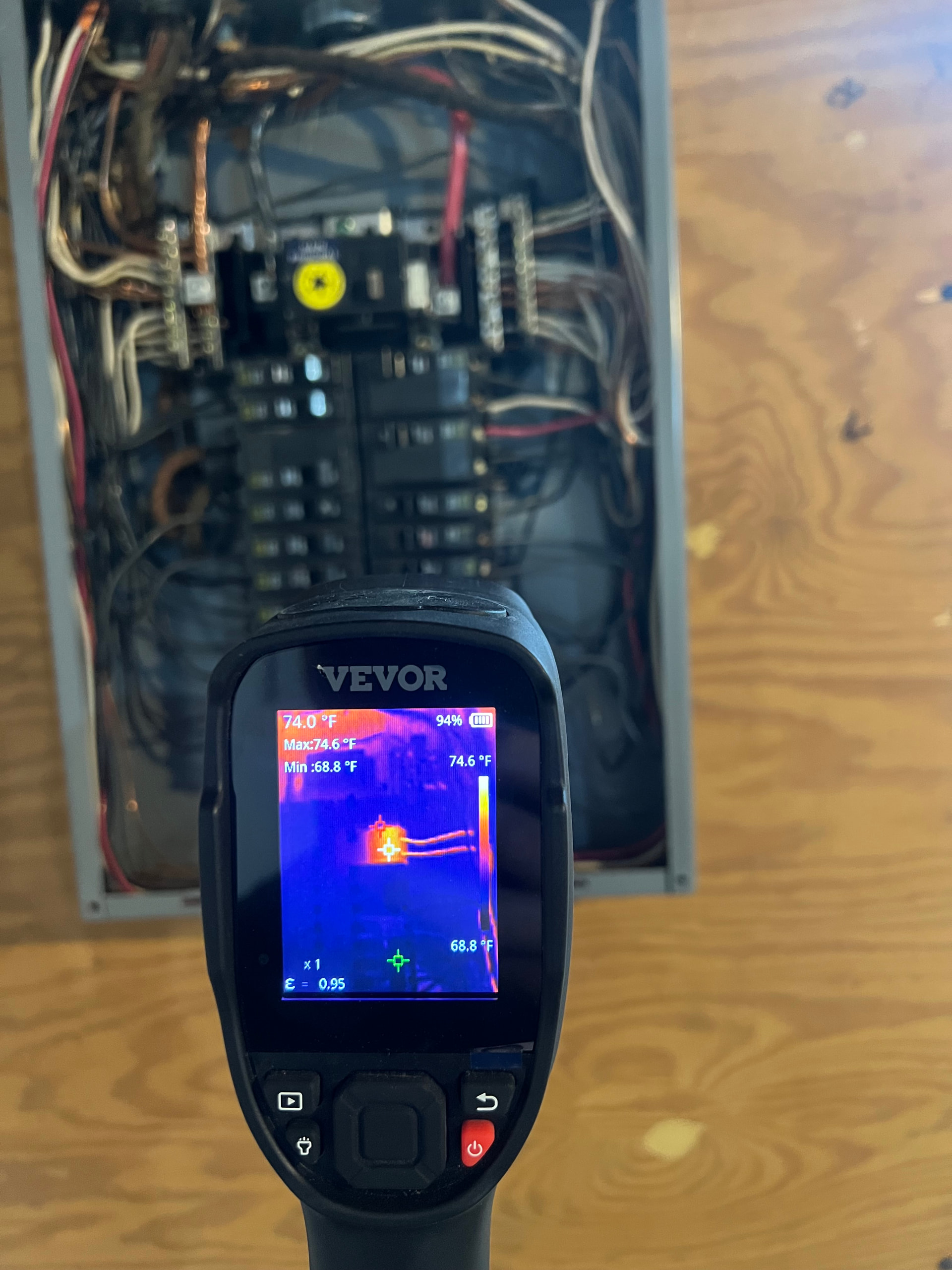
1 Like
See anything, any evidence, in any area, that may allow moisture into the cable sheathing, which will then allow moisture to migrate all the way to the panel box?

1 Like
I see the threads on the conduit is rusting out, wow could that mean there is a possibility of those copper black sheathed wires look like that all the way through? I know that is beyond what an inspector can determine though
The corrosion is caused by two dissimilar metals (copper and aluminum) bonded in an electrical circuit.
Why doesn’t it appear every time? Good question. I don’t know, but there is a preventative step of using an anti-corrosive paste seen often in electrical panels.
1 Like
That’s a good find. Since corrosion does not conduct electricity they need to fix that…
1 Like

That had actually crossed my mind was the disimilar metals, but I thought what you had said why wouldn’t it happen every time or see it on breakers.
Thank you!
some Of that “dust” is literally corrosion falling off from the lug due to exposure to moisture. The green patina on the conductors is from the copper, the white corrosion is from the aluminum lug, The brown outer section of the stain puddle on the breaker below indicates water. If it quacks like a duck, walks like a duck, and looks like a duck, it’s not a duck???
Also, don’t rule out water from the room above from a leak or spill
6 Likes
You need water for that. À la leakage, spillage, condensation. Otherwise, all these new homes being built with copper-clad aluminum wiring would have a problem.
1 Like
Just report what you see and recommend a licensed electrical contractor to review and make all repairs as needed. No need to figure out the why’s or how to correct.
Keep it simple!
5 Likes
Looks like water got between the copper conductor and the insulation. Not that uncommon for water to enter the conductor in the meter enclosure. As mentioned just call out what you see. There are several issues in this panel so referring it to a sparky is warranted.
3 Likes
Don’t forget about deteriorated weatherhead seals. Once the moisture, (wind driven rain / snow / ice) make it past that, it’s straight down the conduit pipe and into the meter box!
We can’t see the one in the photo I requested from the OP, so all that was left to see was the rusted conduit as evidence of a potential issue.

3 Likes
Yes! I need to learn to keep it simple, I spend to much time onsite wondering why I see what I see. But it is a good education hearing others help me think this through
2 Likes
Yes my pictures were not the best, I had a hard time buying in to all the pictures everyone talks about, but now I know close ups and from different angles makes sense now. I remember this going through my head while up on the roof was the angle of that weather head, it sure seemed like it didn’t have much of an angle to it, but I just brushed it off because I could tell it was a legit part so how could it be wrong and not some custom made weather head. Also the hole openings in the weather head seemed oversized but I have not seen enough to know if the oversized holes are normal or if the wires should fit snug.
1 Like
Check out the neighbors weather head angle compared to the blue house which I practiced on. Do you notice the angle difference.

I don’t think the weatherhead angle is a definitive issue. It would not have raised any red flags for me. As a few good inspectors mentioned above, water can enter multiple areas, such as the plumbing, the sidewall, the meter, etc.
3 Likes
The sweat dripping off a new inspector’s head after removing their first dead front for the first time.
5 Likes