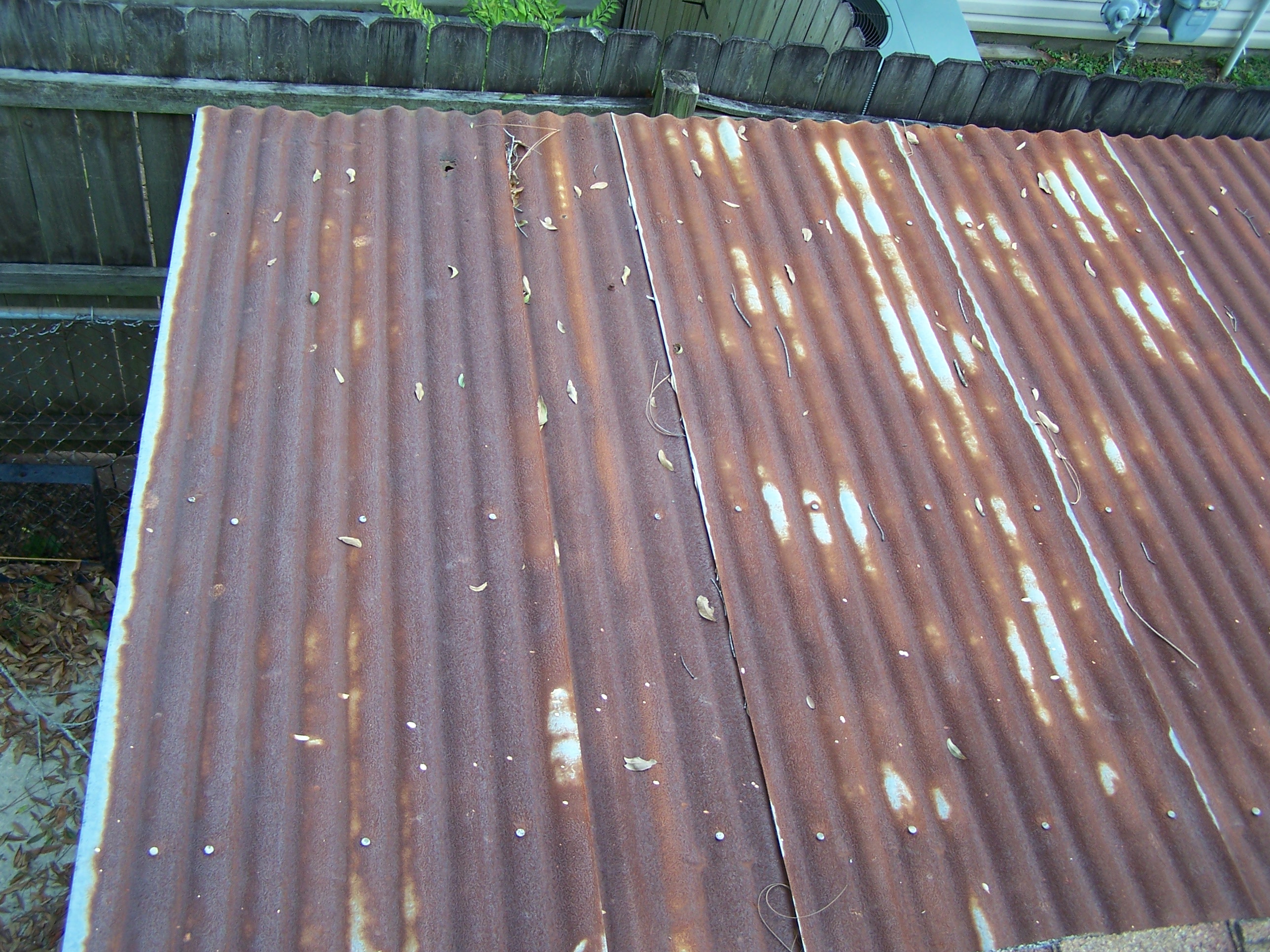
The roof slop is what is typically considered a flat roof with a slop of 0 in 12 to 2 in 12. The material is a coated tin. The material is seriously rusted and deteriorated with some areas with holes that have completely rusted through. Recommend full replacement by a certified-qualified roofing contractor.
Asphalt
Is the most commonly used roofing material, shingles, roll roofing, built up roofing, and modified bitumen. The typical most common is Asphalt shingles. The four types are, strip, and laminated, interlocking and individual shingles. Saturated felt is used as an underlayment. In climates prone to ice damming and water backup, common specialty eave flashing are typical.
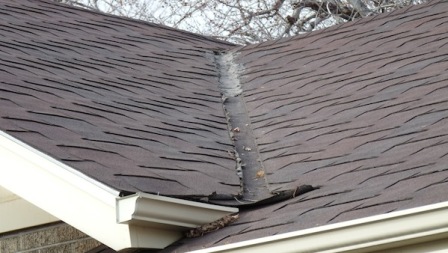
This roofing system does not have proper flashing. this can allow water intrusion and should be recommended for repair or correction by a roofing professional. Water intrusion can weaken the internal structure of the house and allow leaking or total roof failure or collapse.
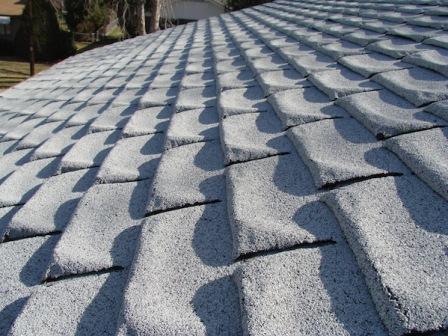
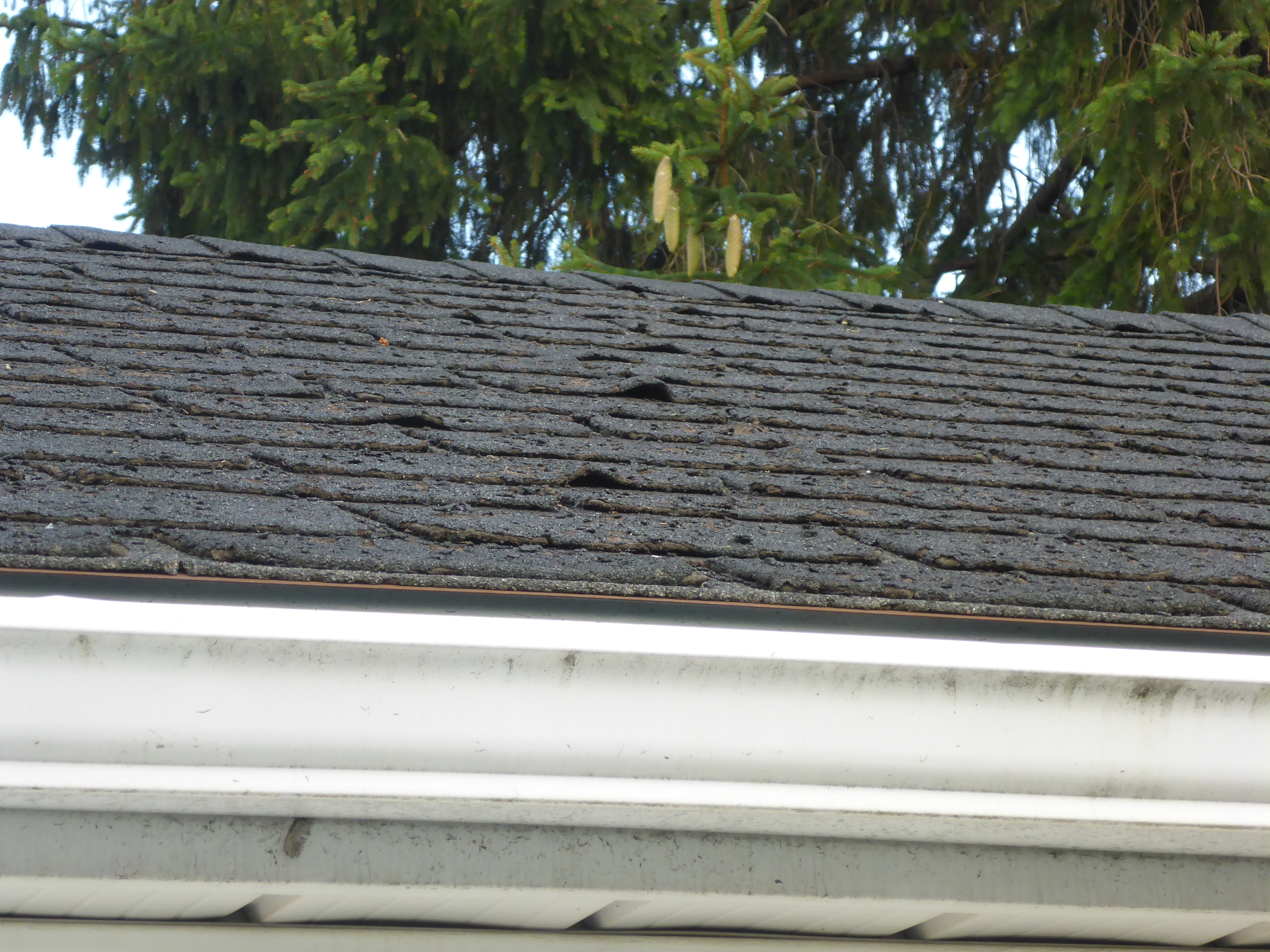
Pictured is a roof covered with organic fiber reinforced asphalt shingles. The are eaily identified by the relative thickness to fiberglass shingles. The pictured shingles have suffered from a failure common to organic shingles. These shingles have been involved in several lawsuits and should be called out as a material defect.
Calculating the area of a roof is often necessary for completing a thorough inspection report. Some basic math skills are required to determine the area. To calculate the area of a trapezoid, measure the add the length of one base to the length of the second, multiply by the height then divide by 2. This will give you the area of a trapezoid.
The roof is meant to keep your home dry, shingles wil push rain Down in to the gutters, this particular roof has architectural shingles installed and it looks like near new condition, valley is properly installed. No exposed nails are seen.
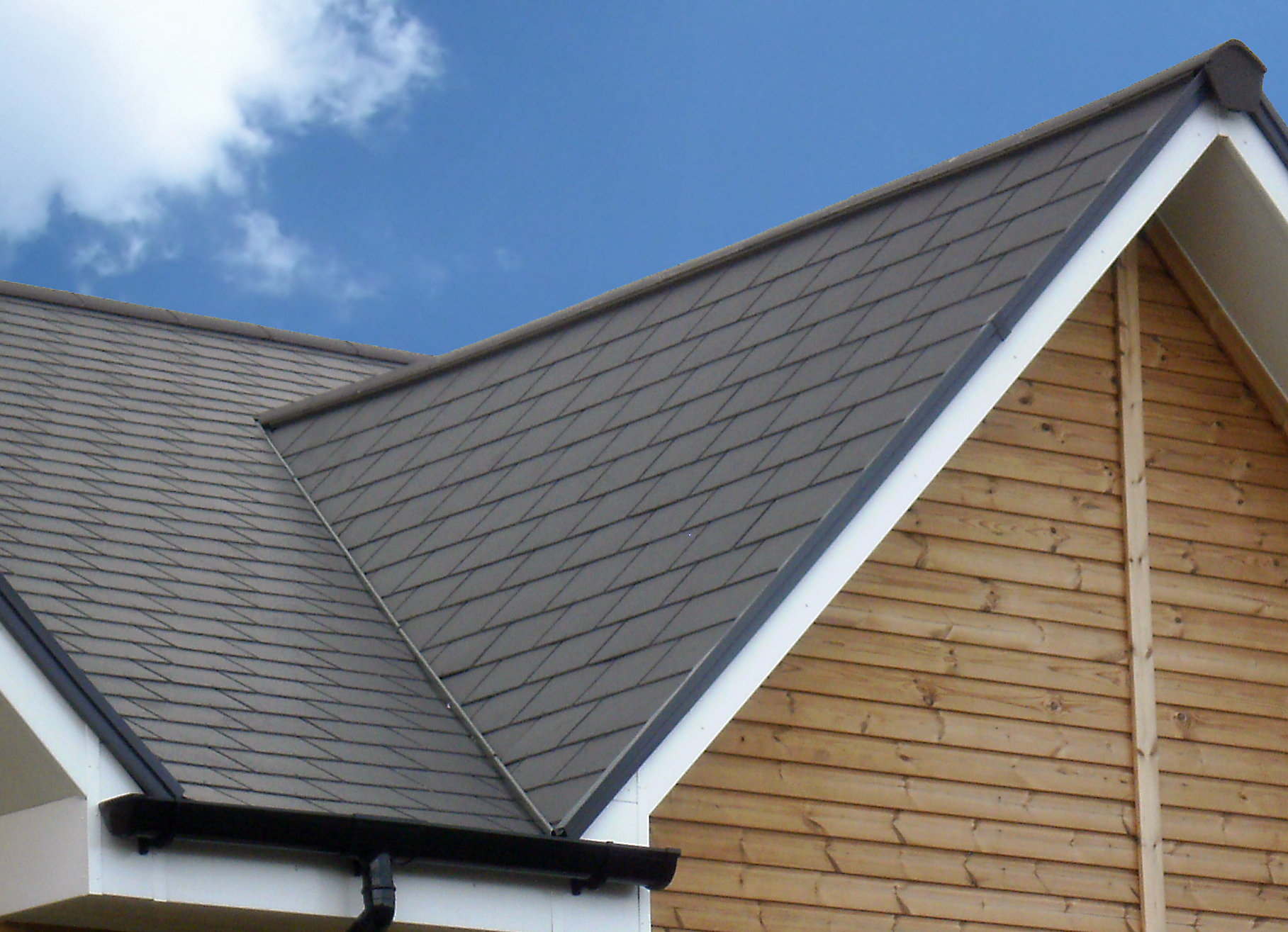
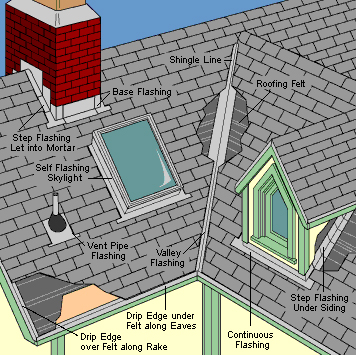
Proper flashing on the roofing system is very important because it not only protects the roof, it also protects everything underneath it all the way to the foundation. This is an important step during the inspection process to check for during a general inspection.
Wood destroying organism. Look out for them, if caught on early, lesser the damage. Look for mud tubes, frass, wood shavings, termites, Carpenter ants, and beetles can structurally damage your home. Keep wood away from soil, and seal all entry points.
Begin installation along the eaves, starting at a corner and working your way around, overlapping each succeeding piece of drip edge by 2-3 inches. After the eave drip edge has been installed, apply the underlayment /ice-water barrier. Once the underlayment has been installed, apply the drip edge to the rakes. Make box corners by wrapping the rake edge around the eave metal. Depending on local wind conditions, roof edge should be nailed every 16" - 24".
A flat roof is a roof which is almost level in contrast to the many types of sloped roofs. The slope of a roof is properly known as its pitch and flat roofs have up to approximately 10. Flat roofs are an ancient form mostly used in arid climates and allow the roof space to be used as a living space or a living roof. Flat roofs, or “low-slope” roofs, are also commonly found on commercial buildings throughout the world. The National Roofing Contractors Association defines a low-slope roof as having a slope of 3-in-12 or less. If a flat roof is perfectly flat it was designed improperly. At least inch of slope per foot is needed for proper water runoff.
The roof covering is old, and the life of covering has expired. The covering does need to be replaced. While it could last a year or so, some areas may need patching with tar as leaks develop. It is recommended to have a qualified roofing company give a proper assessment for the repair/replacement of the roof.
Roof Inspection Safety- So while the standards say we only have to inspect a roof from the ground or at the eaves with ladder I find myself going on to any roof I feel is safe to walk on. I know this goes above the standards but I feel its the best way to fully see any issues that may get missed. Ive thought about using tie downs while on the roof but then there is the issue of damage to the roof. So for me I use my best judgement when inspecting a roof for my own safety.
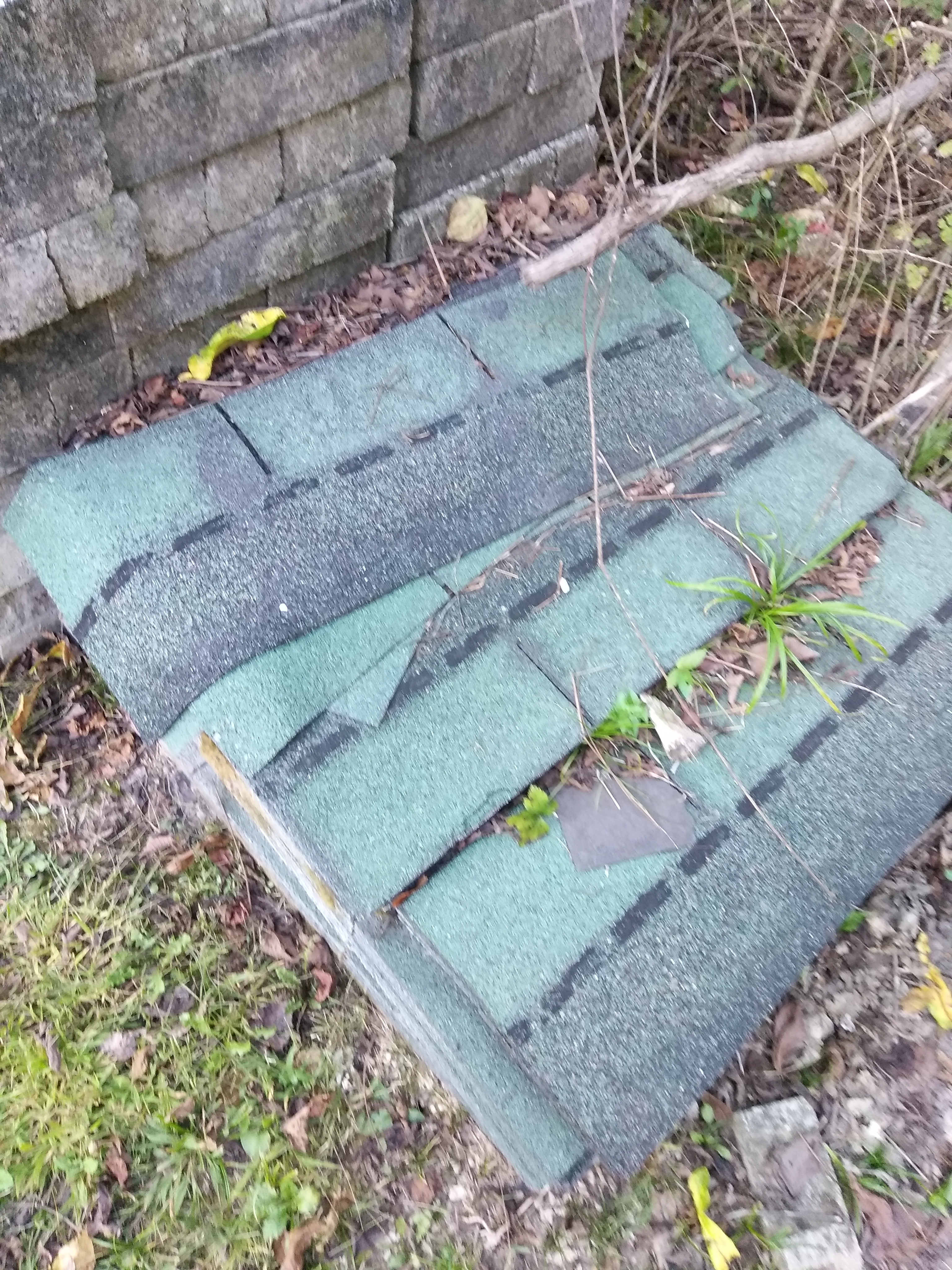
This photo is of some three tab roofing that has been left outside in the elements for several years. As you can see there is vegetation growing in between the shingles. These shingles should not be used on a home in this condition.
I was looking at an illustration showing a minimum height for a chimney above the roof. We often see chimneys very close to the roof. There is one thing that I am not quite sure of. When using the 10’ distance from the roof and the chimney should extend 2’ above that. Does the chimney flue count in that 2’ distance or just the chimney box?
Crickets should be installed on Chimney which have a 30" width or larger (NRCA recommends 24" or larger). The inspector will want to ensure all the flashing has been installed using good building procedures. The front of a chimney should have an apron flashing.
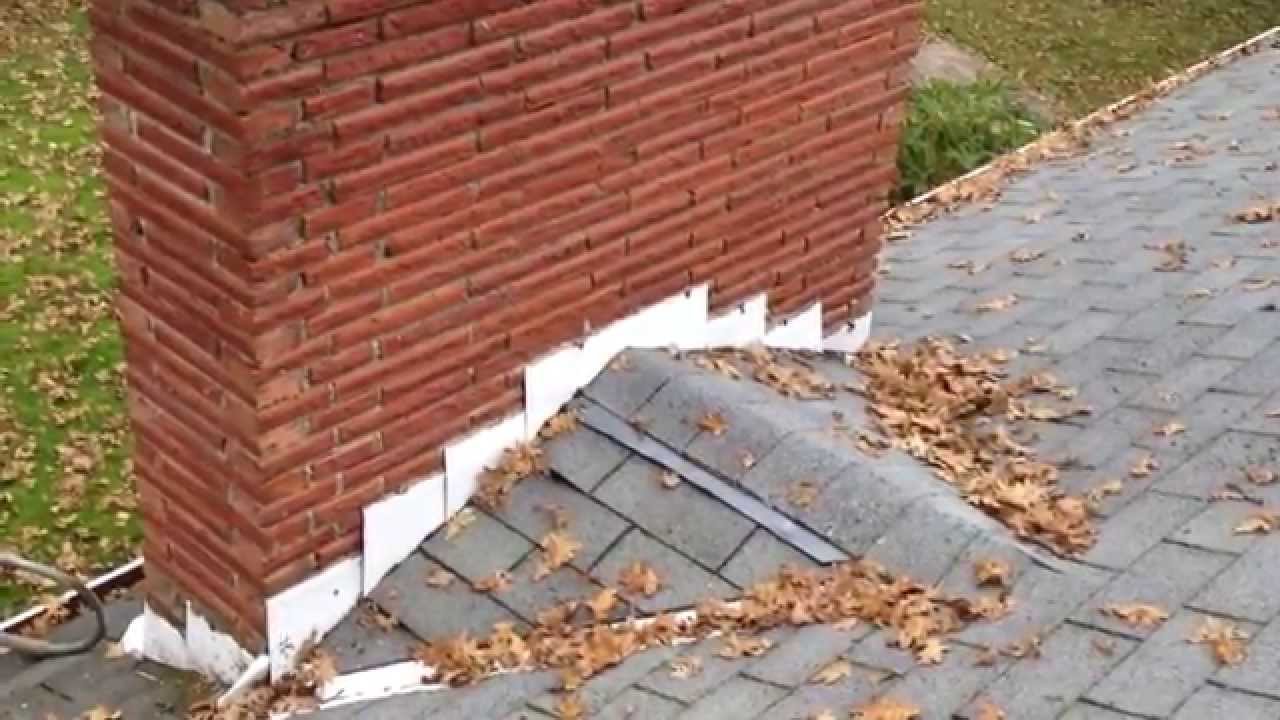
Crickets should be installed on Chimney which have a 30" width or larger (NRCA recommends 24" or larger). The inspector will want to ensure all the flashing has been installed using good building procedures. The front of a chimney should have an apron flashing.
The attached photo is an example of a home that has multi-level roofs. The lower of which is covered with 3-tab shingles and the upper is covered with roll roofing. Overall, the roof coverings were in serviceable condition with multiple signs of aging present.
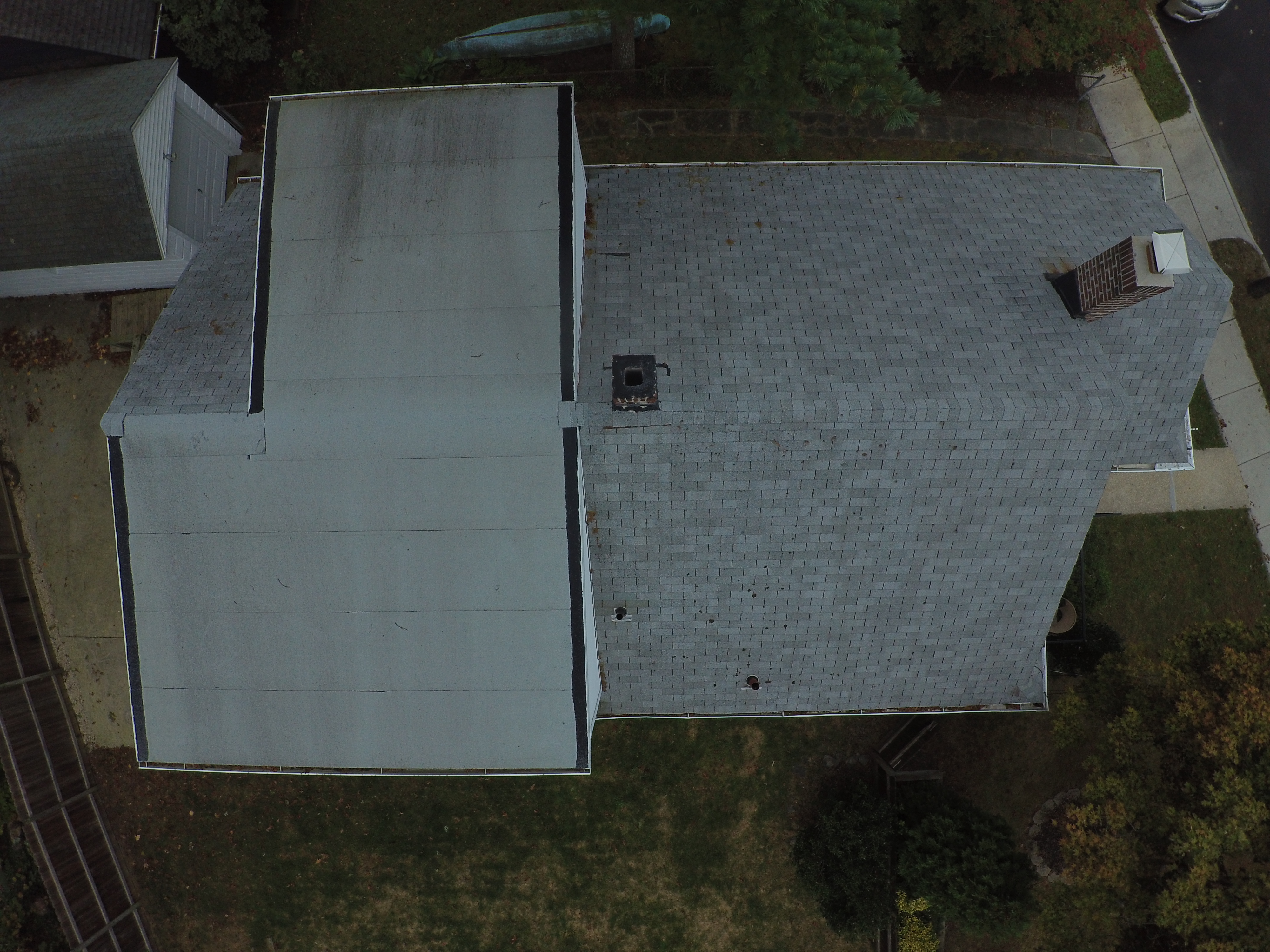
I looked through quite a few pictures in the gallery. The dominant thought I’ve had after doing so is that there are a large number of items we as inspectors can not actually see to be able to comments confidently on surfaces. For example, the 6-nail rule for high wind areas. We sure aren’t going to manhandle the shingles to get a look in every location. Furthermore, let’s say the attic access is a scuttle with no flooring at the far end of the house. We can’t even assess the nailing at say about 85% of the sheathing.
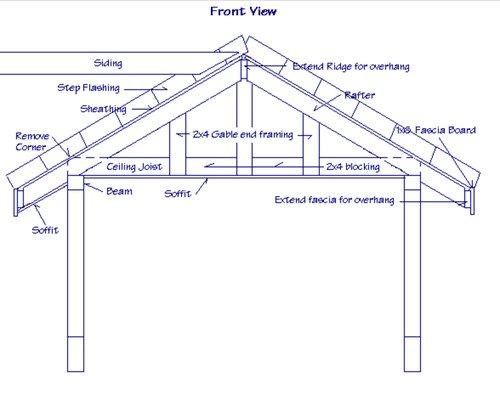
this is a picture of a conventionally pitched roof and it offers proper roof lingo. I used this picture to help me understand locations and placements of items covered in the course such as flashing, sheathing, underlay and roof covering.
I choose 10 ways to save energy in your home. In this article I learned that by simply changing out your light bulbs you can save over 3% on your energy costs. this is a small simple change that can save hundreds over years.