And the median number of sales per agent was: 2.
Way too many real estate agents.
4 Likes
You can thank 0bidenomics and the Border Czar 0kambala.
1 Like
Oh please, there’s been too many RE agents since forever.
3 Likes
Oh please? Separate the wheat from the chaff?? 


I believe this is the source of Nick’s statistic. It is an interesting read and has some parallels to the inspection industry.
2 Likes
There are way too many real estate agents crossing the border.
9 Likes
With 48 hours of training and a simple exam by the state anyone can become a real estate agent today. There are over 6000 real estate agents along the coast in my area.
REA’s are not needed in my state for a real estate transaction. The heavy lifting is done by the attorneys at closing.
6 Likes
I wonder how many illegal immigrants crossing our border become REA’s?
Hmm…  Oh wait probably none or next to none, because the illegals are given free room and board, EBT cards, transportation, health care, etc.

Interesting article but there are many generalities, truths, and potential falsehoods in it.
The CFA report examined the annual number of home sales of 2,000 randomly selected agents working for major companies in four diverse urban areas – Central Pennsylvania, Orlando (FL), Tucson (AZ), and Minneapolis (MN).
Not sure what they mean by “diverse” but the sampling is so small that the reported numbers are certainly suspect and most likely not accurate.
The article also does nothing or states it did anything to cull out the RE Salespeople that are in positions where the company, or even laws (like Texas) require the person to have a RE Salesperson/Broker license but the business is not actively “selling” homes but instead are in rental management, new home Salespeople working for Builders, etc.
“There is no other financial services industry or profession where part-time, marginal workers are so ubiquitous,”
We know that is not true and only have to look at our profession. There are others as well.
Despite the agent glut, most major companies continuously advertise sales positions.
Most certainly true along with the reasoning provided for this! Of course it will never change until individuals who want their RE license become smart enough to research the profession first!! Also those who benefit from this are the schools they go to, the RE Associations that charge them BIG BUCKS in annual membership and other fees, as well as all the ancillary service/product providers. What might help unsuspecting Marks’s is if the State laws require that the very first class any RE Salesperson takes is a business class to include statistics on the number of RE Salespeople already licensed (broken down into their areas as well), the actual known costs to run that business, the games Brokerages play to entice them in their firms, etc. After that if a person is still not educated enough to make a good decision then nothing more can be done and they are screwed!
Since most agents are independent contractors not employees, firms have limited liability for the conduct of these agents.This limited liability diminishes the incentive of companies to adequately train, mentor, and oversee the new agents.
That might be the case in the areas/States they did cursory research on but it is not true in Texas. Brokers are fully responsible for their Salespersons actions and are subject to the same penalties for their actions. If this were done in all States then Brokers might do their jobs better.
The residential real estate industry needs to set higher standards for training and overseeing new agents. These standards would increase agent competence, help ensure a smoother sales process, and enhance the reputation of the industry as well as benefiting consumers.
The “residential real estate industry” can put in writing anything they want but have no teeth to enforce it in reality. This concept will only even partially work if it is mandated by law.
CFA urges home sellers and buyers to research the recent sales experience and customer reviews of agents before hiring one. The most useful sources of this information are Zillow and Realtor.com. “Researching agents will not only benefit individual buyers and sellers but also help ensure a more competitive marketplace where competent agents are more likely to succeed,”
This one is true but so BS in nature since consumers can not get the true picture of a Salesperson/Broker from any review site! That statement is true no matter what the profession is. The only review site usage worth looking at is the person/business that has lots of negative reviews. Now you know who to stay away from. There are plenty of ways to game review systems to get a glowing average.
For RE Salespeople/Brokers both Realtor.com and Zillow are there to service the RE Salesperson and not the consumers. Realtor.com has no easily located RE review function. As for Zillow all I ever see there are RE Salespeople with “No Reviews” or near perfect, glowing reviews which is far from reality.
2 Likes
Then I guess that makes your point moot.
You are correct.
Congratulations, you’re the official spin master. It’s like talking to a child. I don’t think you’re capable of carrying on a real conversation with anyone.
6 Likes
That’s funny Richard, coming from they guy with your beliefs and assertions.
1 Like
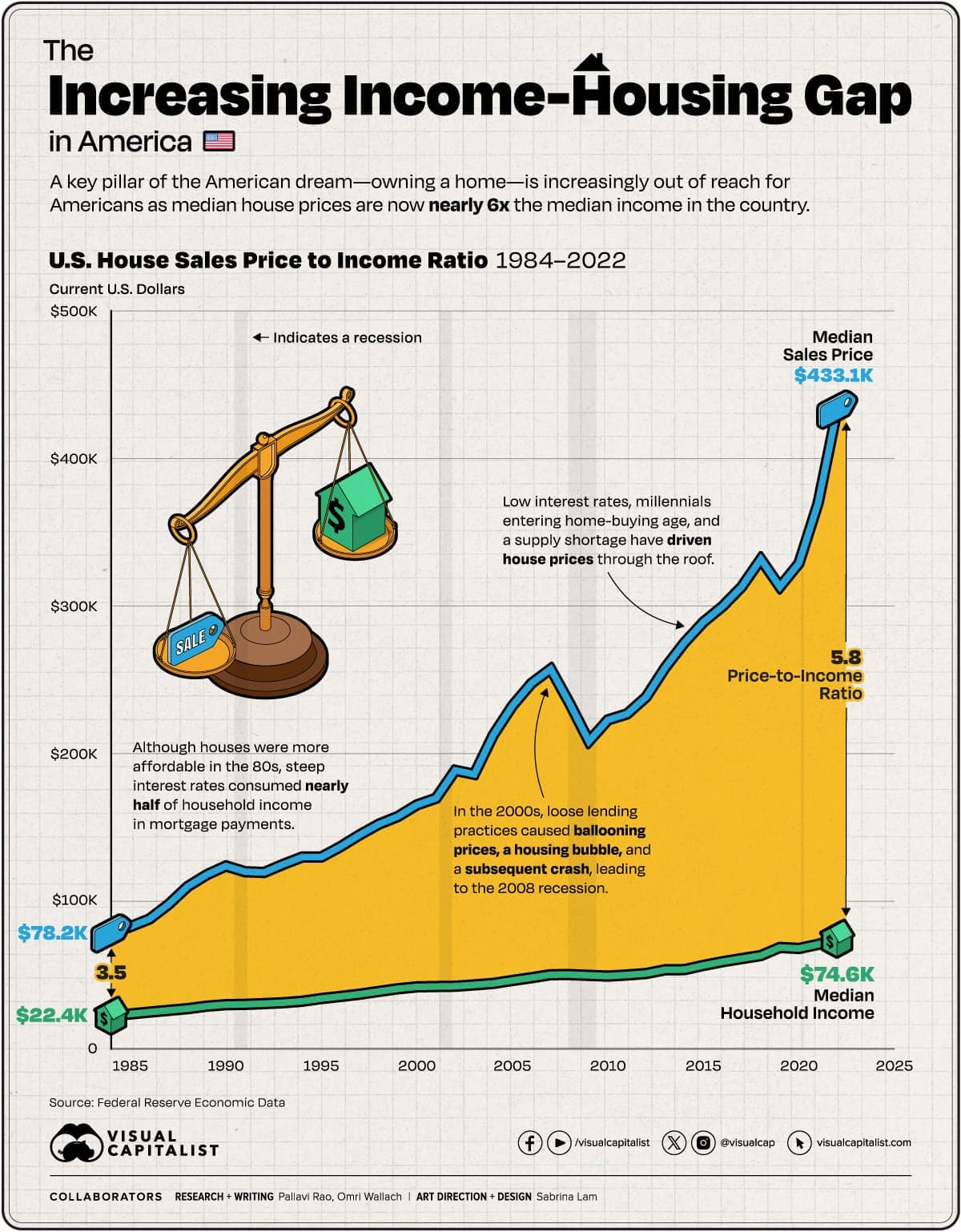
More likely the actual cause is the failed economic policy of trickle down economics that has actually increased the wealth divide, putting more money in the hands of investors who are buying property and driving up the cost.
1 Like
Cause of what?
There is no economic policy of trickle down economics and never has been. That is a fiction created as a Democratic talking point.
The economic policy of this nation is now, and always has been, “free market” or “supply and demand.” The bone of contention between “good” and “bad” economies is the degree to which it is encumbered by government intervention.
Note the answer.
Investors buy those properties to rent them out. For every home they take off the market, they also take a family out of the market. In other words, they don’t change the supply/demand ratio.
1 Like
When investors remove homes from the market to rent that could have been sold to retail buyers, the supply/sales ratio for retail purchasing changes.
We all saw it. We missed out on homes that we could have inspected for our clients had they not been outbid by a giant investor paying cash.
3 Likes
And how is this different from any other year?
Lots of agents don’t sell a how in most years.