That’s an amazing photograph. Peeks my interest into the history.

Doesn’t Nick have something regarding this at the InterNachi Inspectors Museum in CO?
Time for a roadtrip!
2 Likes
Use your InterNACHI discount at www.InspectorOutlet.com
1 Like
And what is being viewed…

3 Likes
I agree 100% but read what the OP had posted. He never said anything about a moisture meter. He said a humidity meter. Hopefully you know the difference between the two.
2 Likes
I’ve seen it a while ago… can you review its 1,2,3 star reviews and comment on them? I was going to get it until I read the reviews. Some higher reviews, mention things like “It is 25 Hz camera, but is NOT high speed. Anything moving is blurred.”
1 Like
“Me”? Your being facetious right?
I can’t follow his replies, they are all deleted…
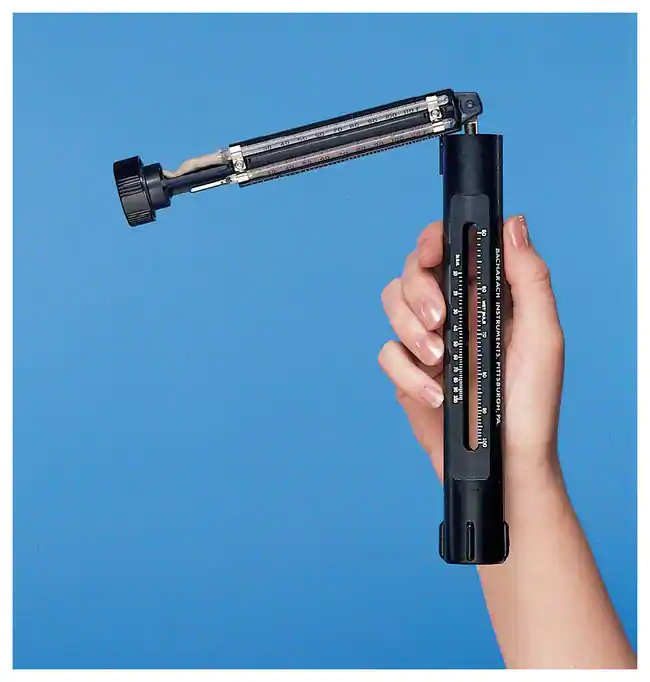
He clearly stated humidity meter. It was quoted in the post from me that you replied from. See photograph below.
It was plain as day. My reply was for your help as I’m not sure what your skill level is. A moisture meter is not the same as a humidity meter.

Martin I met David years ago and I can assure You His skill level is well above any pay grade I achieved…trust me He knows the difference between meters…It’s funny how guys starting out all want to buy their tools fom the discount store and then get offended when You tell them there is a big difference between tools and toys…
2 Likes
Thank you! Valuable feedback. I agree the camera is not the end all be all. I think its good when you suspect a water leak and you want to to hone in on it. In other words you want find other additional evidence of water penetration. Just one tool on your tool belt.
1 Like
I dont have any problem with the refresh rate. I have the cheaper version also, with the 9hz rate, and its annoying, because you have to wait a couple seconds every time you point it at a new area. This one keeps up.
My only complaints are:
*I never really got the wifi option to work well, and for some reason I have a hard time getting the images to save to my computer with the usb cable as well. So I just take a photo with my phone of the screen image and save that way.
*Obviously, the image is not very good of the background, but it has very good thermal sensitivity, so I just take a photo of the screen, and then another of the same area with my phone to show the location.
Here are some photos from a recent inspection. (brand new home, had an condensate line leak inside the wall that I didnt even know about until the thermal. The carpet wasnt even wet to the touch yet, so I probably wouldnt have caught it otherwise.


There was also water inside the wall at the pantry and bathroom, and some missing insulation in an attic with no access (same house)


So by posting both pics, it is easy to show exact location.
2 Likes
David, some of us can be jerks on here, myself included. Dont let that scare you away from asking more questions in the future, we all need help once in a while, especially when getting started.
I have seen alot of new guys ask one question, get hammered, and then never return.
I think that is a disservice to the forum, and the new guys, and I, personally have decided to try and act with more respect.
Hope to see you on here again soon.
5 Likes
Excellent. Thank you, @dhorton2.
2 Likes
Hello Daniel. Great mini-tutorial on the practical use of an IR Camera for locating, and easily documenting, temperature anomalies for a home inspection. You have the heart of a true teacher. Thank you for your great post.
1 Like
David, “good” and “inexpensive” may be thought to be mutually exclusive, but “good enough” (for our purpose) and “a good value” are not. I found something you may be interested in: Ulefone Power Armor 18T I’ve been using the Ulefone-T armored series of phones for my inspection device for years. No need to carry a separate device to get adequate IR photos. The current model, the 18T, has a built-in FLIR camera (yes, FLIR - the brand) with the same resolution as some FLIR cameras that cost many thousands of dollars. Needless to say, when you attend one of the IR Camara training and certification courses that are presented by companies that also sell IR cameras, they don’t mention the Ulefone. And when asked, they dodge the question. So, look for your self at the cost of the phone and the IR resolution of its built-in FLIR camera. I think you will be surprised. Oh, yes, and I’d stay away from the cheap china knock-offs. They work for a while, but don’t last. They are, at best, throw-away units. Good luck, and welcome to the Best Business in the world.
2 Likes
I have the exact one, still in the box if you need one! 
1 Like
I have one as well. Just not that particular model. My days of needing it and many other tools changed from when I transitioned from HVAC to home inspection. They are packed away as their use far exceeds a home inspection. My response to the humidty meter statement is in regard to inspectors having unreal expectations when the simply buy a tool.
Cheap $200 FLIR One cameras that plug into the bottom of a smart phone work quite well. We have found many issues in our leak detection location business where more expensive specialized equipment has fallen short. My FLIR barely larger than a lighter is ALWAYS in my pocket when working.