Stucco homes are not all that common in my area so I had trouble finding one to inspect. I settled on a school in the neighborhood which I determined to have MD EIFS. The covering was recently replaced and was in excellent condition, in fact I had a hard time finding a defect at all. I spent a significant amount of time familiarizing myself with the system as it was the first I’d seen of its kind. Looking forward to seeing some different systems in future inspections.
I have read the article on the history of Stucco. It’s very interesting to see how far it’s come. The course on Stucco and EIFS is a big help to understand some of the issues to look for when doing a inspection.
Thank you
Hi
I just need to clear up something please
Are the exam questions off the examples please 6A 6B 6C 6D or is it on the whole course???
thanks
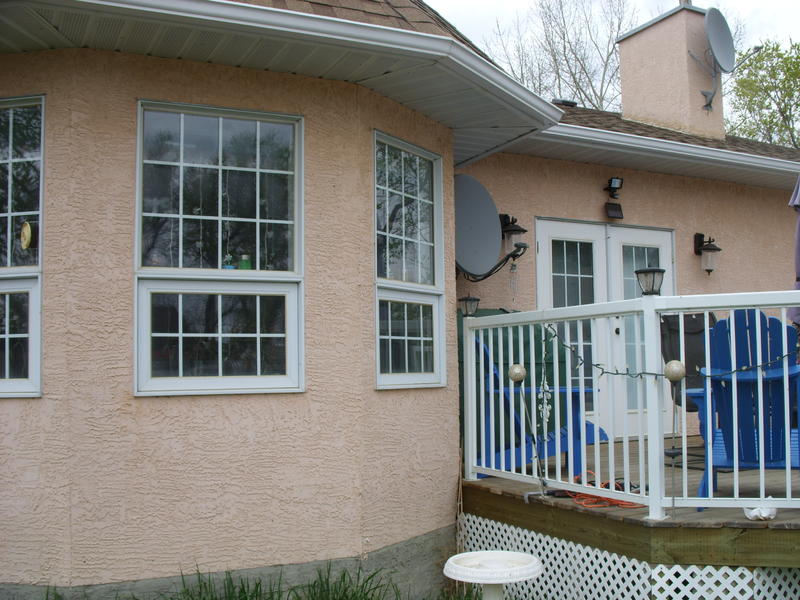
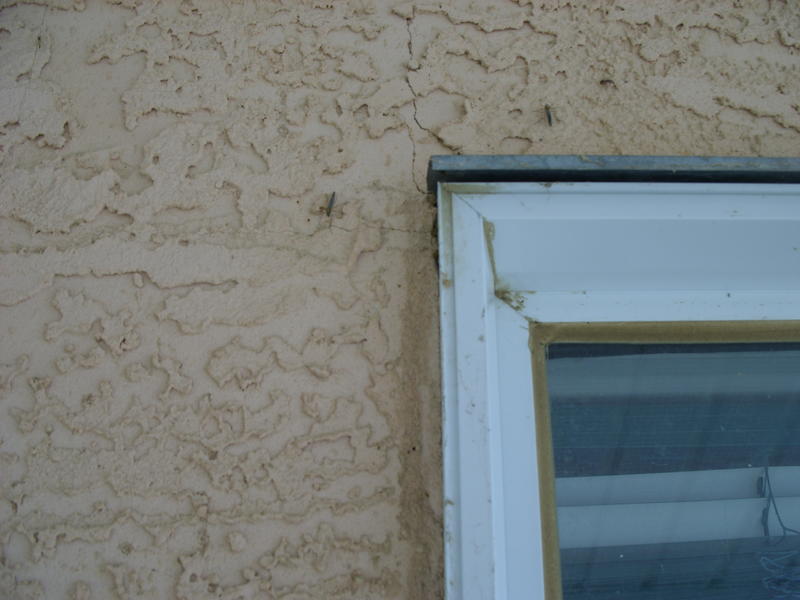
I am presently taking this coarse on Stucco & EIFS Inspection and was asked to comment on a picture related to the course. The house in this picture is a traditional three coat stucco system and is about 21 years old. There is a few small cracks above the door and below the window on the left side.
Regards Perry Schopff
I have completed a visual inspection of this 21 year old property and found the exterior cladding appears to be 3 coat conventional stucco. There are several small cracks mainly above and below the corners on some windows and doors. All the flashings appeared to be in place. The parging below the stucco will need to be repaired as several areas are showing age and have slid down.
Regards Perry Schopff


For additional reading I chose to study into The Preservation & Repair of Historic Stucco. I found this very informative and useful as I further understand the uses and benefits of this relatively inexpensive and versatile product. I also understand now how important it is to try to match the ingredients to the era the structure was built in.
Perry Schopff
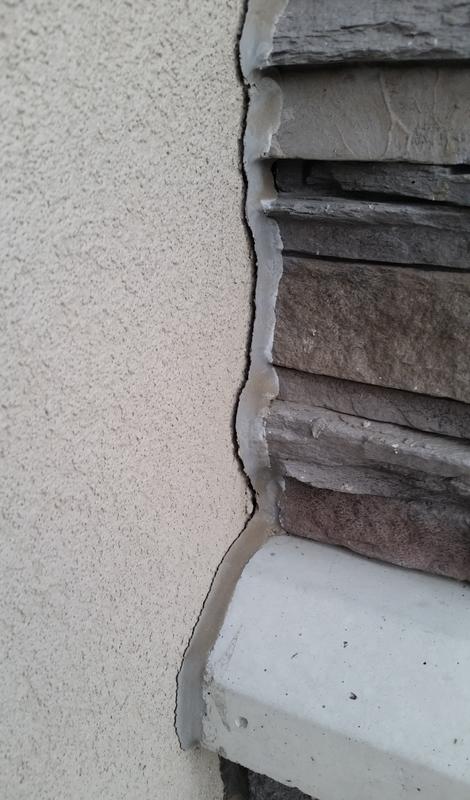
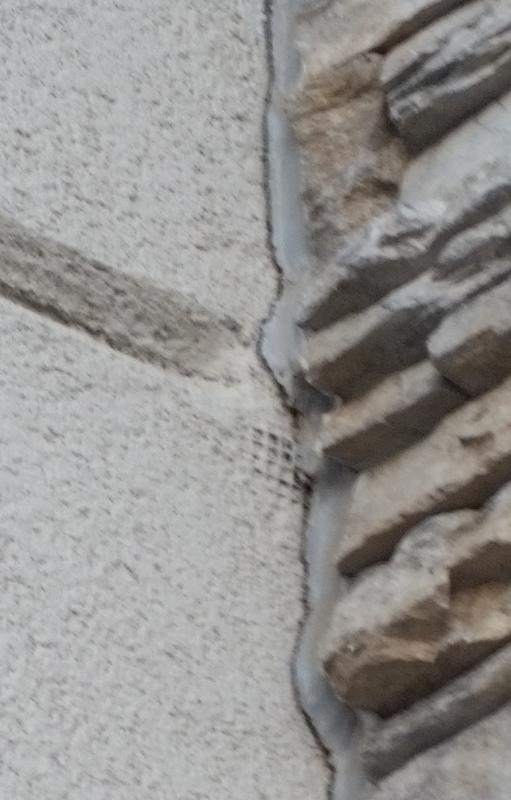
Attached are several images of a commercial building that had both manufactured stone and EIFS installed. Although I was unable to determine the precise type of EIFS I did rap on it and heard the hollow sound typical of EIFS due to the very thin stucco layer and the underlying plastic foam insulation.
I noted that the interface between the stone and the EIFS exhibited a caulked joint that was pliable and was supported by a backer rod, however the entire length of the caulked joint had pulled away from the stucco rendering the caulking ineffective for moisture intrusion control. This should be rectified.
On another part of the wall I noted partially exposed fiberglass mesh. This mesh should be fully encased in the stucco. This is an indication of poor workmanship but does not necessarily need to be repaired.
I recommend a third-party inspection be performed by a qualified stucco inspector.
Derek Walker
Acumen Inspections
NACHI 14012307
I performed a visual inspection of an EIFS finish on a commercial building, with the intent of determining if any moisture intrusion had occurred. The system appeared to be MD EIFS that had been installed, alongside manufacture stone, on new construction within the last few years. I observed no visual evidence that moisture had entered the system and caused damage however there was an area of concern detailed below.
The vertical caulked joint between the manufactured stone surface and the EIFS was perhaps 3/8" maximum, and less in places where the stone protruded towards the EIFS more closely. This small gap was sealed using backer rod and caulking however the caulking was more of a fillet-type profile in the places where the gap was minimal.
A major concern I had with this caulked joint is that the entire bond with the EIFS had pulled away, leaving an approximate 1/8" gap where moisture could enter. Virtually all of the vertical caulked joints suffered from this phenomena. The system should be inspected by a third-party EIFS inspector to determine the required corrective measures.
The rest of the EIFS installation appeared sound and was in good condition with no signs of impact damage or moisture intrusion.
I selected and read the document titled “Stucco - The Preservation and Repair of Historic Stucco” from the InterNACHI Library of Inspection Articles as part of the requirements of the “Stucco & EIFS Inspection Training for Inspectors” course.
I found this article interesting and relevant to both the course and my career as a home inspector. There are many buildings in my city that are 50, 60, and 70 years old and have original stucco finishes applied. Although many homeowners might choose to replace the finish with a modern alternative, there could be some that wish to preserve the look of their homes and thus would need recommendations on repairing the old stucco.
I will be sure to note the link to this article in the event that one of my clients inquires about repairing old stucco.
Hi everyone:
I want to include a few pictures of man made stone installed on a newer home .
The pictures show two large gaps for water intrusion at the top corners of the shutters. Also included are the window sill shots showing how some of the stones top surface run back toward the window which allows for a water to drain back toward the window instead of away from it…
thanks
Nat
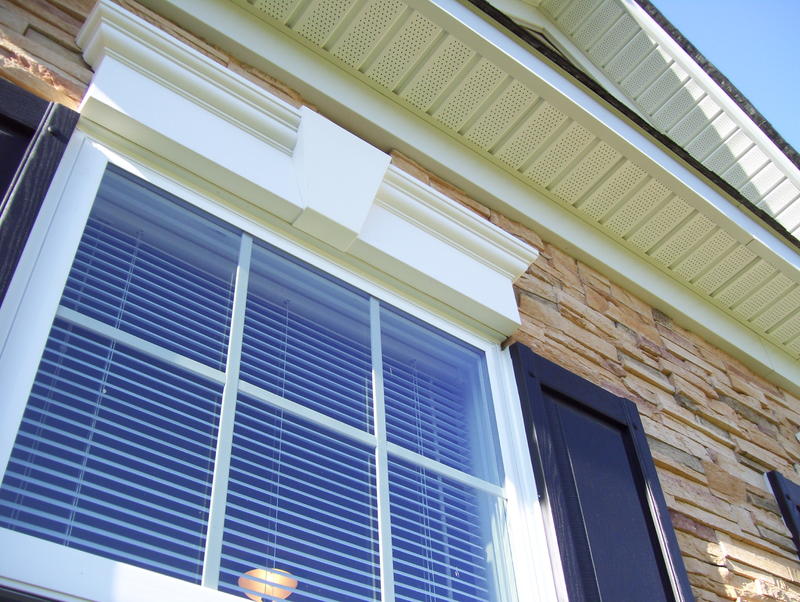
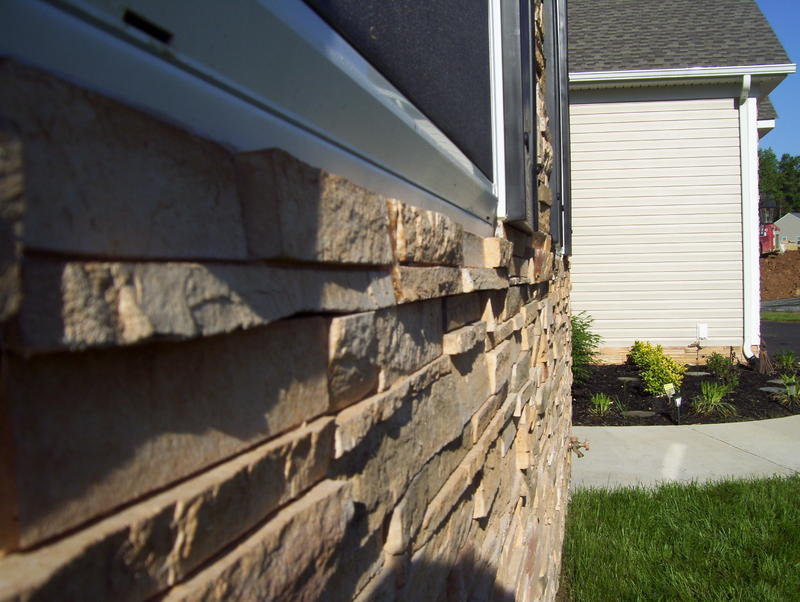


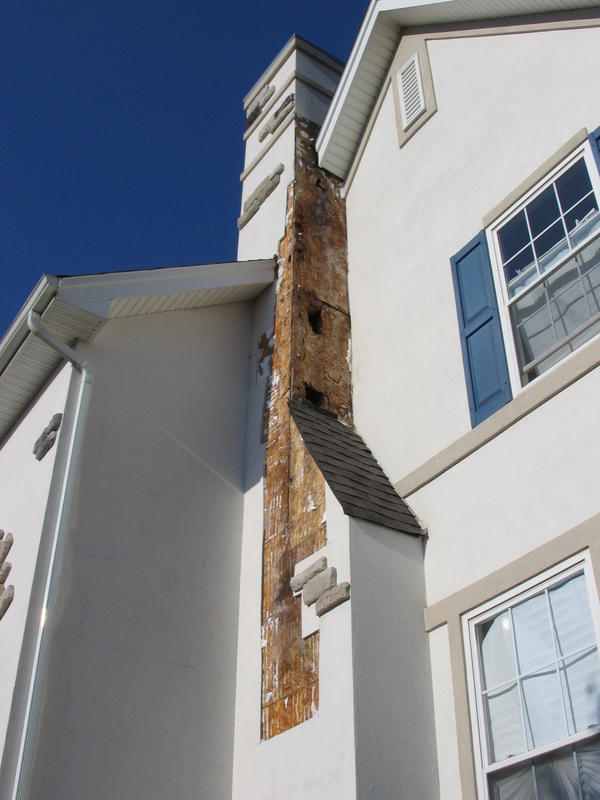
Hi All…Great class. This is a picture of a barrier EIFS system that was not correctly flashed were the chimney meets the roof. It illustrates the damage that can be caused when EIFS is not installed properly.
Dan
With what I’ve learned so far I was able to do a visual inspection of a 3500+ square foot home that was totally clad in stucco. According to the owner, the stucco was on the home when she bought it 20 years ago. The stucco has been well maintained. After inspecting I determined the cladding to be an one coat system with EPS. It consisted of consisted of a plywood substrate, paper membrane, EPS, wire mesh, base coat and finish coat.
In sharing my thoughts, I read the article about stucco consumer. I got a firm understanding of the chemistry of stucco. As a general contractor, I’ve seen many stucco repairs that were horrid. Now I understand why and how to avoid it in future jobs. I’ve also seen contractors use products not mentioned in the article, such as thin set as a base coat. Thus, I still have some unanswered questions.
I just read the article about stucco consumer. I finished with a pretty good understanding of history of the types and application of stucco. As a general contractor, it helped me to understand why some stucco repairs fail and, gave me a guideline that I can follow when supervising future stucco repairs.
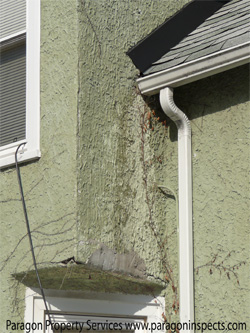
This is a house that has a kick-out flashing missing and water has been penetrating the system for quite awhile. While there is a lot of visible damages showing, This definitely needs to be investigated further to see how much damage has been caused.
This is a picture of a traditional hard coat system (HCS) at a soffit near the corner of an unfinished garage. The cumulative thickness is at approximately 7/8". The picture also shows a little bit of the casing and wire. In this instance, the up heave of a tree’s roots seem to be raising the footing or foundation thus moving the facia up and leaving the stucco soffit to continue on it’s original plane. Further investigation showed spreading of the rafters at this location as well.
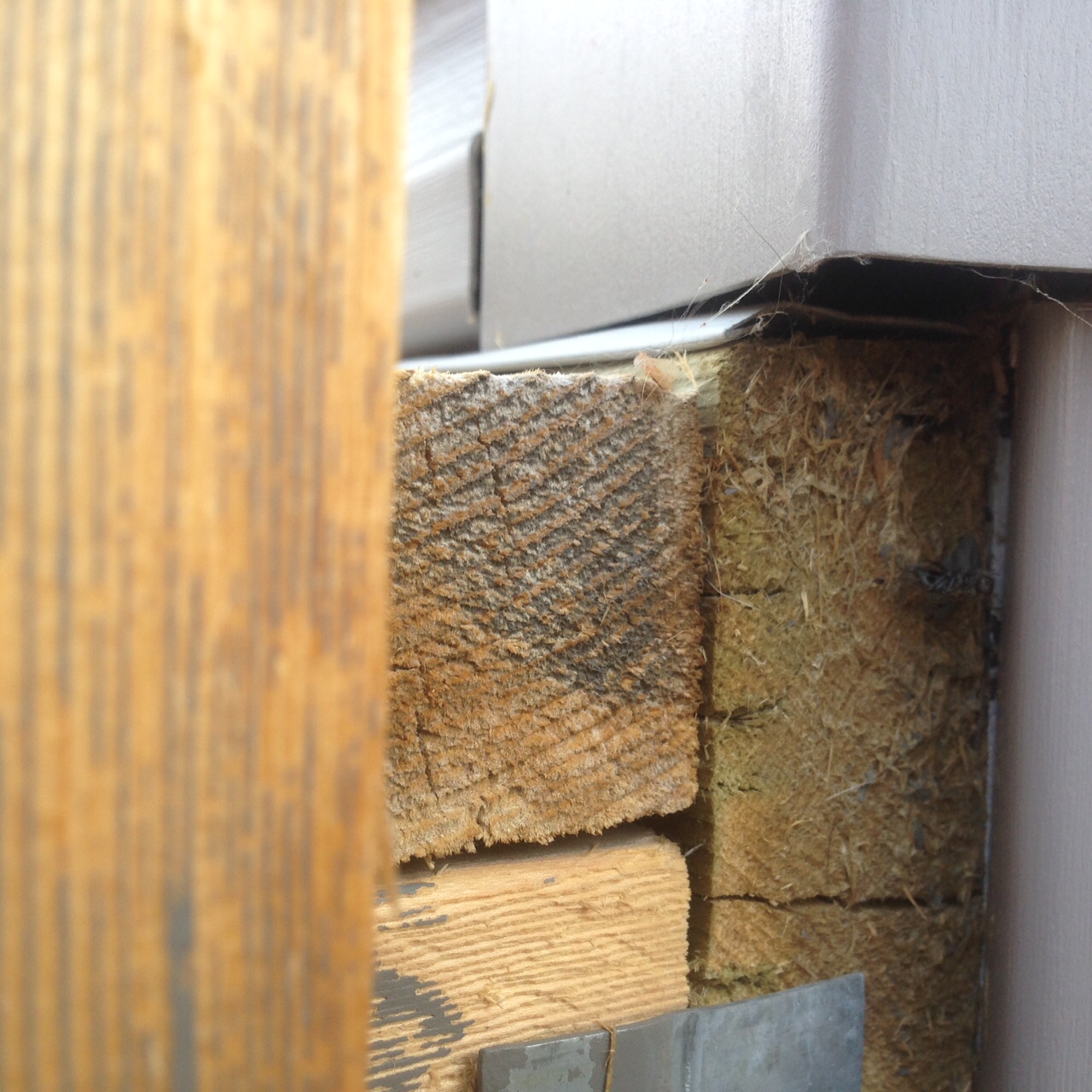
Here is picture of flashing above a deck that is terminated too short. It also doesn’t have an end dam. It is also made of non-treated lumber.
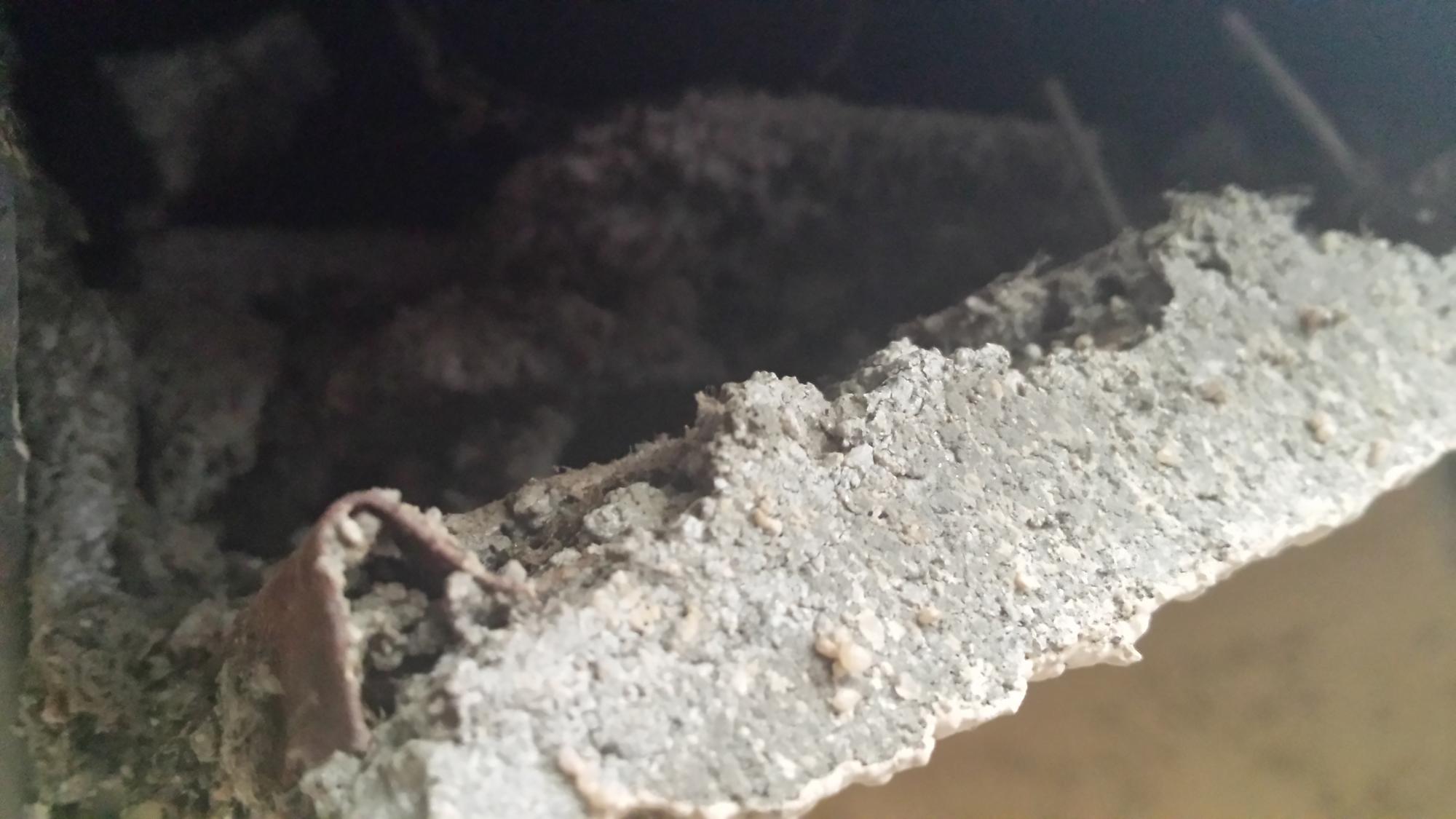
Picture: you can see in the picture the stucco is thin, missing, cracked, prior repairs have been made, insulation board is exposed and the base coat may be missing.
Inspecting: I imagine a lot of clients will have concerns when they see cracks in stucco, being able to confidently explain the material, how its installed and assess the crack(s) could be a valuable skill to put things into perspective and relax a client.
Article: “Stucco” included a lot of historic uses, maintenance, repairs, etc.
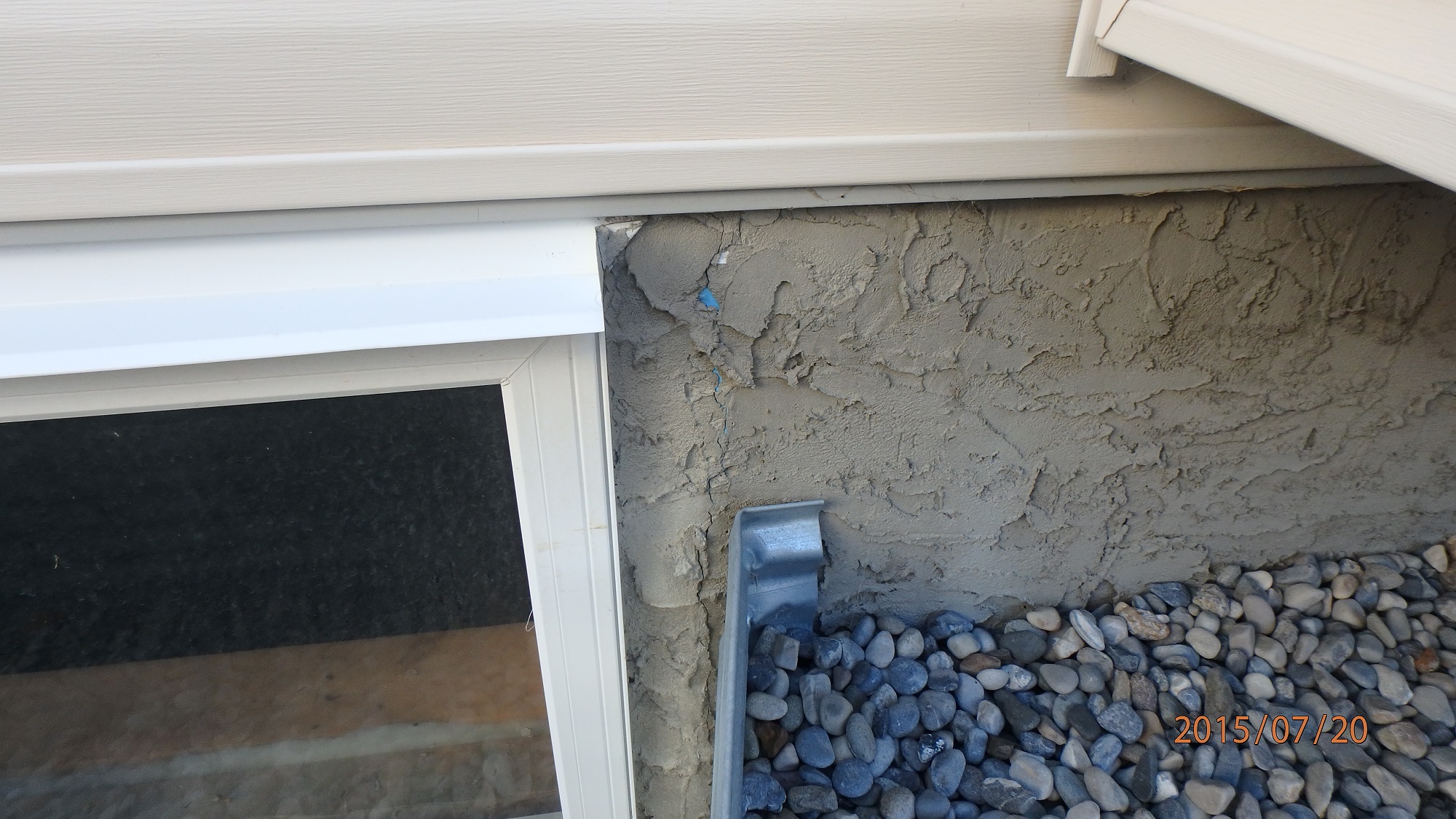

There seems to be a lot of people out there installing stucco incorrectly. I rarely see an expansion joint between dissimilar materials and windows. Instead of using a flexible sealant, they are grouting the joint. This seems like cracks just waiting to happen.